Indoor Cat Basics
How to Tell If Your Indoor Cat Is Bored
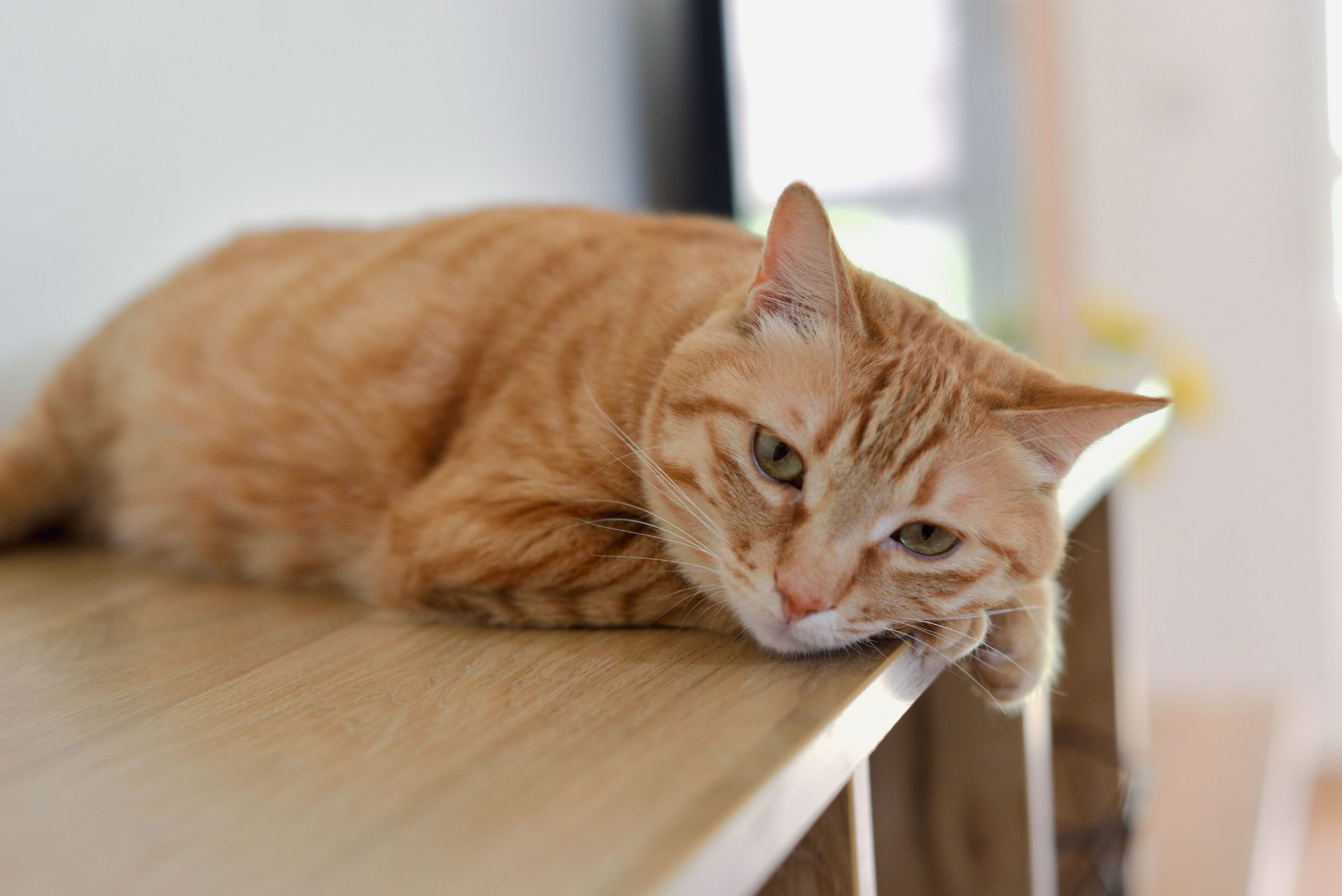
Boredom isn't one symptom. Look for patterns, changes, and whether your cat has useful outlets for normal feline behavior.
10 min read
Keeping a cat indoors solves a lot of problems.
Cars, fights, parasites, disappearing for three days and returning like nothing happened—indoor life removes plenty of risks.
But safe and interesting aren't the same thing.
Your cat may live in a climate-controlled home with fresh water, soft blankets and better healthcare than half the human population, yet still spend most of the day looking at the same four walls.
Keeping an indoor cat happy doesn't mean entertaining them every waking minute or turning your living room into a feline amusement park. It means giving them ways to do the things cats are built to do: climb, hide, scratch, stalk, chase, explore, eat, watch and occasionally interact with us when they've decided we're worthy.
A few thoughtful changes can make a surprisingly big difference.
When people hear “cat enrichment,” the first instinct is usually to buy more toys.
Toys are useful. But a pile of plastic mice on the floor isn't an enriched environment by itself.
Think about your cat's entire day.
Where can they go when they want to be left alone? Can they climb somewhere high? Do they have something they're actually allowed to scratch? Is there anything interesting to watch? Does food always magically appear in exactly the same bowl? Do they ever get the chance to chase something?
Those questions matter more than how many toys are in the basket.
A good indoor setup gives your cat options.
Cats are very good at telling us which options they prefer—usually by completely ignoring the expensive thing we bought and moving into the cardboard box it arrived in.
Before buying another gadget, look at the room from cat height.
Then look up.
Cats make use of three-dimensional space in a way we don't. A cat tree, sturdy shelf, window perch or safe piece of furniture can dramatically increase how much usable territory your cat feels they have without adding another square foot to the house.
Height can also give a cat somewhere to observe what's happening without participating in it.
That's particularly useful when the vacuum is out, guests are over, the dog is being obnoxious, or your cat simply doesn't feel like dealing with society today.
Hiding matters too.
A cardboard box in a quiet corner may be all your cat wants. A covered bed, carrier left open as a familiar retreat, or space under furniture can work just as well.
The important part is that the cat can choose to retreat there without immediately being dragged back out for cuddles.
In a multi-cat home, space becomes even more important. Food, water, litter boxes, resting places and scratching areas shouldn't all exist at one easily guarded choke point. One cat silently controlling access to a hallway can cause trouble without a dramatic fight ever happening.
Your indoor cat isn't hunting mice for dinner.
Their brain did not receive this memo.
Interactive play gives that hunting behavior somewhere appropriate to go.
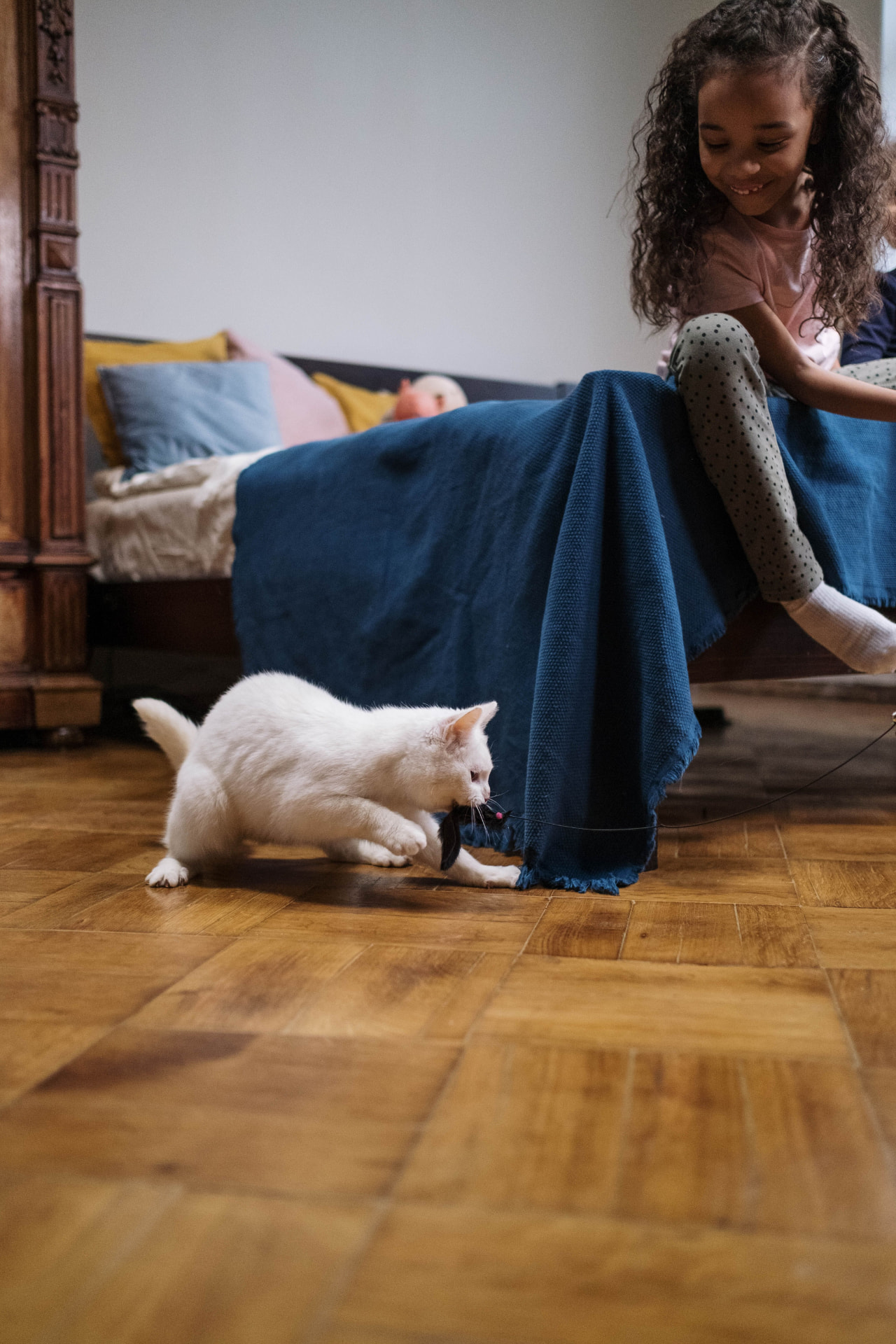
A wand toy is particularly useful because you control how the “prey” moves. Drag it behind furniture. Let it disappear around a corner. Stop. Twitch. Run.
Don't just helicopter a feather over your cat's head for ten straight minutes while wondering why they're staring at you.
Think mouse, bug or bird.
Let your cat stalk it. Chase it. Pounce. Catch it.
A couple of short play sessions can be more useful than trying to keep a cat interested through one long session. Younger, energetic cats may want much more; an older cat may be perfectly happy with slower floor-level stalking.
And rotate what comes out.
A toy your cat hasn't seen for two weeks can suddenly become fascinating again. The same toy that has been lying beside the couch since February may have become part of the furniture.
One safety note: string, ribbon, feathers and similar toys can be swallowed if pieces break off. Interactive wand toys are better put away when playtime is over rather than left out for unsupervised chewing.
For a practical routine, see How Much Exercise Does an Indoor Cat Need?.
Your cat is going to scratch something.
This isn't a character flaw.
Scratching helps cats stretch, maintain their claws and leave visible and scent-based marks in their environment. The goal isn't to convince a cat that scratching is illegal. It's to make the legal option better than your sofa.
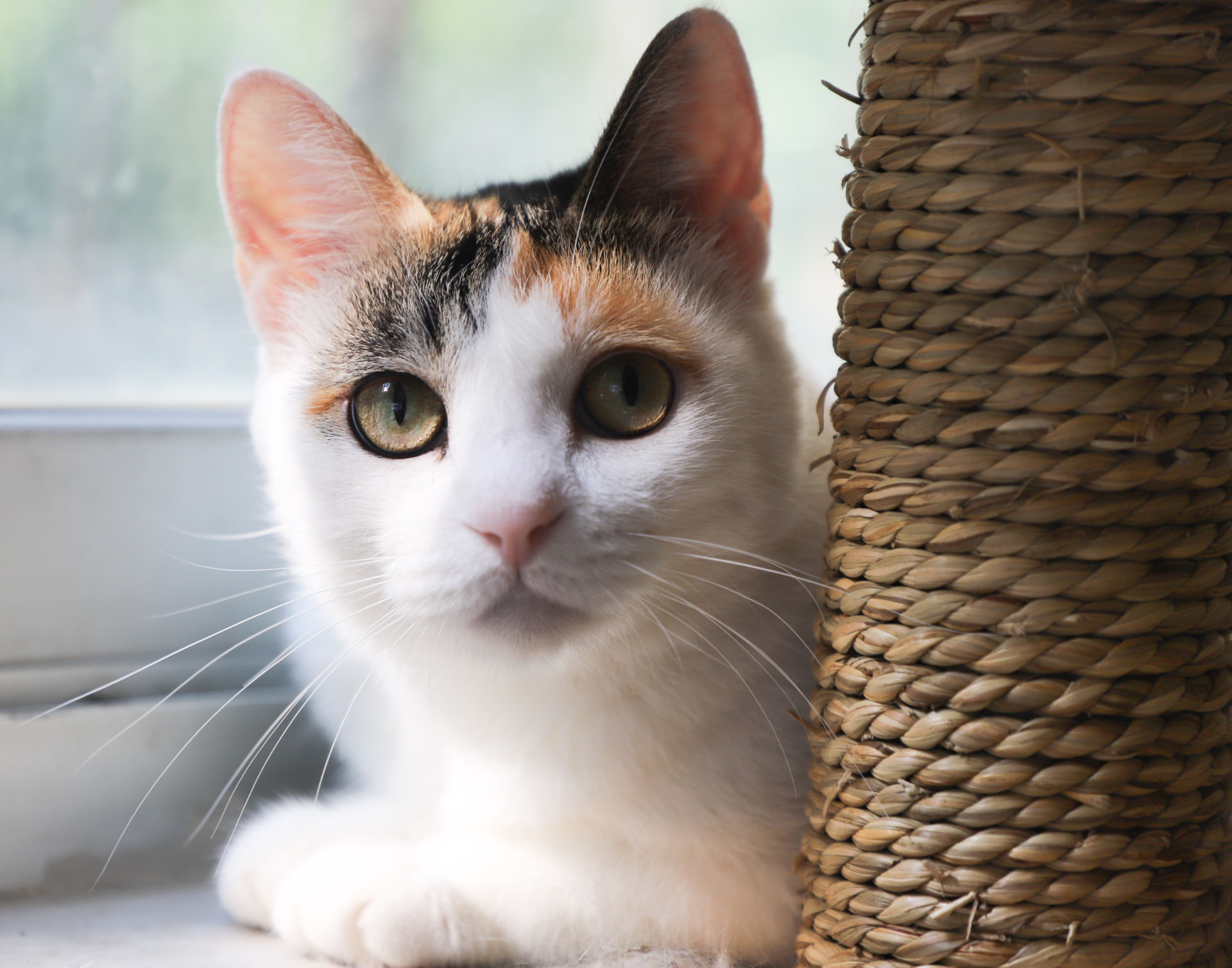
Some cats want a tall vertical post where they can stretch almost completely upright. Others like horizontal cardboard. Some want both.
Stability matters more than people realize. A scratching post that wobbles or falls over the first time your cat commits to it has just made an excellent argument for returning to the couch.
Location matters too.
If your cat scratches the side of the sofa every morning after waking up, placing the approved scratching post in an unused bedroom on the other side of the house probably isn't a winning strategy.
Start where the cat already wants to scratch.
For a lot of indoor cats, food is the most exciting event of the day.
You can work with that.
Instead of serving every bite in one stationary bowl, use part of the daily ration in a puzzle feeder, hide small portions in easy-to-find locations, or put some kibble into a toy your cat has to roll or manipulate.
Start easy.
If the first puzzle requires a mechanical-engineering degree, your cat may simply walk away and wait for management to fix the problem.
Once they understand the game, you can increase the difficulty.
The food still counts, though. Puzzle feeders don't create calorie-free kibble.
If you're dividing food into several small meals, How Often Should I Feed My Indoor Cat? explains how to do that without accidentally turning enrichment into extra dinner.
A good window can be excellent cat television.
Birds, people, leaves, squirrels and neighborhood activity give a cat something that actually changes throughout the day. A comfortable perch makes that view much more usable.
Not every cat finds every view relaxing, though.
If an unfamiliar outdoor cat regularly appears outside the window and your cat responds by growling, pacing, spraying or attacking their roommate, the view isn't enrichment anymore.
Pay attention to the cat you actually have.
For a relaxed window watcher, the perch may become a favorite spot. For another cat, closing the blinds on one particular window may make the house calmer.
Cardboard boxes, paper bags without handles, safe objects to investigate and occasional changes to the environment can add variety too.
None of this has to be expensive.
Your cat does not know what you paid for it.
Indoor enrichment isn't entirely about objects.
You are part of the environment too.
Some cats want to sit on your chest six inches from your face. Others prefer to hang out on the other end of the couch and consider that a deeply intimate evening.
Both are cats being social.
Regular play, talking to your cat, gentle grooming if they enjoy it, reward-based training or simply being available for contact can all count as positive interaction.
What matters is that the interaction works for that particular cat.
Forcing a shy cat into your lap because “they need socialization” isn't enrichment. Neither is repeatedly picking up a cat that has made its opinion on being picked up extremely clear.
Give them opportunities to interact.
Then listen when they answer.
Cats tend to appreciate knowing where important things are and roughly how life works.
Breakfast happens. The litter box remains where expected. Their favorite sleeping area doesn't disappear every afternoon. The household has some rhythm to it.
That doesn't mean nothing should ever change.
Small novelty can be useful precisely because the rest of the environment feels secure.
Rotate a few toys. Bring out a cardboard box. Move a tunnel into the living room for the evening. Try a new puzzle feeder. Change the route of a wand-toy chase.
You don't need to redesign the apartment every Tuesday.
In fact, suddenly changing everything at once may be stressful rather than entertaining.
Familiar base. Small changes.
That's usually a much better deal.
This gets tricky because cats don't have a universal “I'm bored” behavior.
A cat who repeatedly attacks ankles, chews inappropriate things, screams for attention or tears through the house may need better outlets for play and activity.
At the opposite end, a cat who seems unusually inactive and has stopped showing interest in things they normally enjoy deserves attention too.
But don't assume every behavior problem is boredom.
Overgrooming, aggression, litter-box changes, appetite changes, unusual hiding or a sudden drop in activity can also be associated with stress or medical problems.
The useful question is whether the behavior is new.
If your cat has always been a 3 a.m. hallway lunatic, you may simply own a 3 a.m. hallway lunatic.
If your normally active cat suddenly stops playing, hides constantly or behaves very differently from usual, that's more than an enrichment project.
For a closer look, read How to Tell If Your Indoor Cat Is Bored.
A happy indoor life doesn't require filling every wall with platforms or buying a new toy every week.
Start with the basics.
Give your cat somewhere safe to retreat. Give them somewhere high to sit. Give them something sturdy to scratch. Play with them in a way that lets them stalk and catch. Make at least some meals interesting. Give them things to observe. Spend positive time together without forcing it.
Then watch what they actually use.
Your Urban Feline will tell you what works—not with a detailed written review, unfortunately, but usually pretty clearly.
And if the expensive cat tree gets ignored while the shipping box becomes the hottest property in the house?
That's still enrichment.
Just considerably cheaper than expected.
If toys are the missing piece, Best Toys for Indoor Cats compares several different play styles, and Best Cat Trees for Indoor Cats can help with the vertical space question.
We research, write and update every guide on this site. Our articles are general educational information for cat owners and are reviewed against current guidance from veterinary and feline welfare organisations. Read our editorial policy.
Boredom isn't one symptom. Look for patterns, changes, and whether your cat has useful outlets for normal feline behavior.
10 min read
Two or three short play sessions a day is a useful adult-cat starting point, but the right routine depends on the cat rather than the stopwatch.
10 min read
Five useful cat toys covering interactive hunting, budget play, solo batting, catnip kicking and electronic movement—without pretending every cat likes the same thing.
12 min read
Four cat trees compared on the things that matter after assembly: stability, usable perch space, scratching surfaces, construction, repairability and price.
11 min read
Get practical indoor-cat tips, helpful guides, and product recommendations delivered to your inbox.
A short email now and then. Unsubscribe any time.