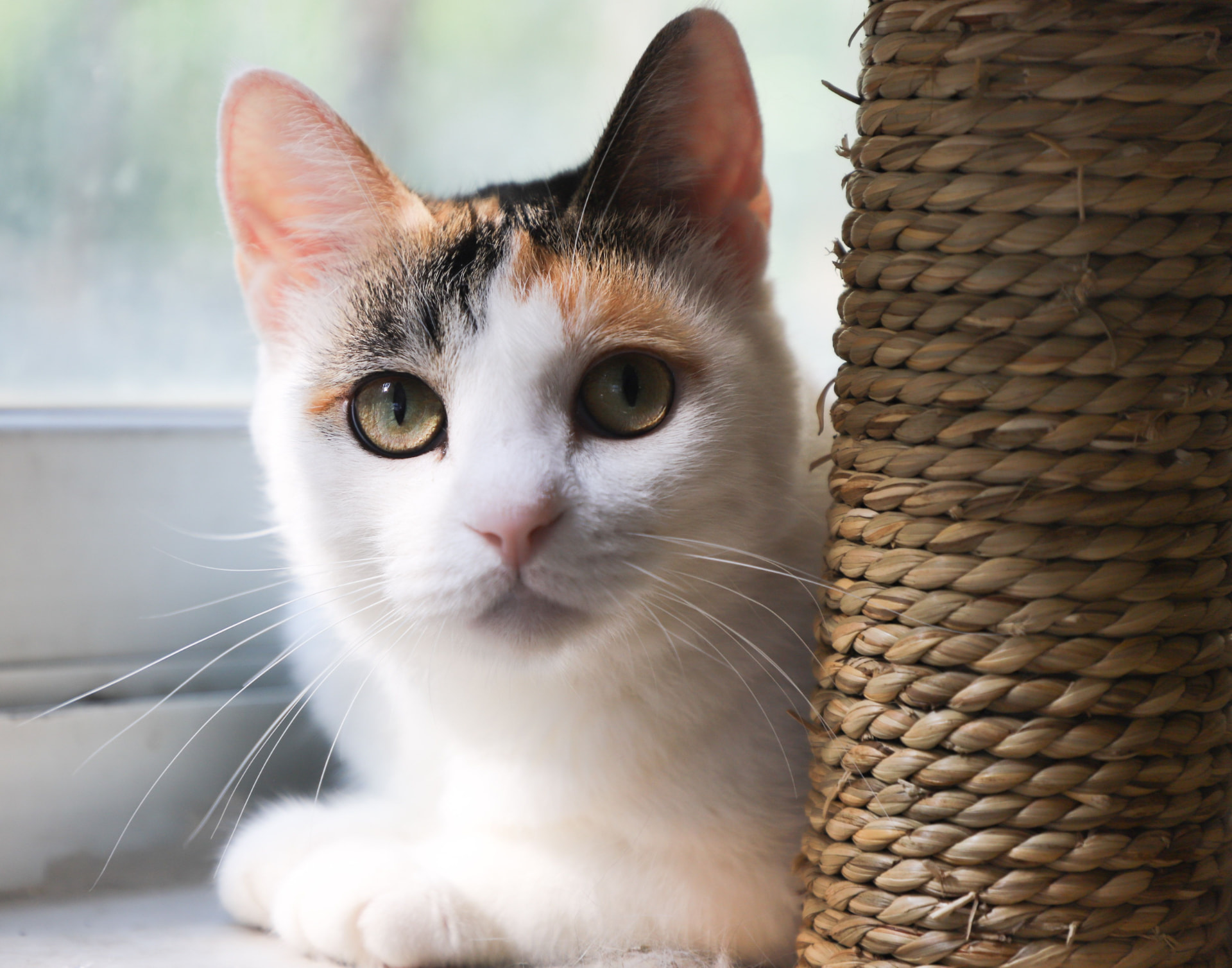
Indoor Cat Basics
How to Keep an Indoor Cat Happy and Stimulated
A good indoor life gives cats ways to climb, hide, scratch, stalk, chase, explore, eat and watch—not simply a larger pile of toys.
10 min read
Buying cat toys is humbling. You spend $30 on an electronic contraption with three speeds, flashing lights and its own charging cable. Your cat investigates it for eleven seconds. Then they spend the rest of the evening attacking the little plastic ring from a milk jug.
This article contains affiliate links. If you make a purchase through one of these links, we may earn a commission at no additional cost to you.
So we're not going to pretend there is one toy every cat will love.
There isn't.
What you can do is choose toys that give indoor cats good opportunities to do things they already want to do—stalk, chase, pounce, bat, grab and bunny-kick—and buy a few different styles instead of filling a basket with twenty versions of the same mouse.
After comparing current products, owner experiences, prices and the kinds of play feline-behavior guidance actually encourages, these are the five we'd start with.
If you're trying to figure out the bigger enrichment picture first, read How to Keep an Indoor Cat Happy and Stimulated.
If you just want the toys, here they are.
| Toy | Best For | Typical Price | Requires You? | Main Catch |
|---|---|---|---|---|
| Go Cat Da Bird | Interactive hunting play | ~$10–14 | Yes | Feather attachments wear out |
| Cat Dancer Original | Cheap interactive play | ~$3–4 | Yes | Extremely basic; supervise wire toy |
| Catstages Tower of Tracks | Solo batting | ~$10–15 | No | Some cats simply won't care |
| Yeowww! Catnip Banana | Kicking/catnip play | ~$8–10 | No | Aggressive chewers can puncture it |
| Potaroma Flapping Bird | Electronic solo play | ~$18–20 | No | Noise/movement scares some cats |
Prices vary and were checked in September 2026.
We didn't rank toys based on how technologically impressive they looked.
Cats have repeatedly demonstrated that they do not respect our technology budget.
We cared more about whether a toy gives the cat something useful to do.
Veterinary and feline-behavior guidance favors toys that encourage stalking, pouncing, problem-solving and prey-like interactive movement. It also makes the less profitable but important point that good cat entertainment does not have to be expensive.
We also looked at durability, price, whether the toy requires human participation, current owner feedback and whether there are obvious safety annoyances.
And because cats are magnificently inconsistent consumers, we paid attention to negative reviews too.
A toy isn't automatically bad because one cat ignored it.
Sometimes you've simply purchased a very expensive object for your cat to ignore.
Best for: Interactive hunting-style play
Typical price: Around $10–14
Play style: Stalk, chase, leap, catch
Supervision: Yes
If I were starting an indoor cat's toy collection from scratch, I'd buy an interactive wand before an electronic toy.
And Da Birdaffiliate is the wand I'd start with.
Its feather attachment rotates as it moves through the air, creating a fluttering motion and sound that can resemble a bird much more convincingly than simply shaking a feather in front of your cat's face.
That matters because how a toy moves is a huge part of whether a cat finds it interesting.
Drag it away.
Let it disappear behind furniture.
Pause.
Make it move again.
Let the cat catch it.
Used properly, a wand puts you in control of the most realistic prey-like movement you can offer an indoor cat, and Da Bird's rotating feathers make that movement easy to produce without much effort on your part.
Best for: Cheap interactive play
Typical price: Around $3–4
Play style: Erratic chase and pounce
Supervision: Yes
The Cat Dancer is embarrassingly simple. A springy wire with a couple of rolled cardboard pieces attached to the end.
That's it.
And yet the wire's tension creates an erratic, unpredictable twitchy movement that a lot of cats find genuinely compelling, arguably more compelling than toys costing ten times as much.
The catch is that it's a wire toy, so it needs supervision and shouldn't be left lying around unattended.
But for the price of a coffee, it's one of the easiest ways to test whether a cat responds strongly to interactive movement before spending more.
Best for: Independent batting play
Typical price: Around $10–15
Play style: Bat, chase, swat
Supervision: No
A track toy is a simple concept: a ball trapped in a circular track that a cat can bat around without you doing anything at all.
The Tower of Tracks stacks three levels of these tracks, which gives a cat more to investigate than a single-level version.
It's not going to replace interactive play, and some cats genuinely won't care about it.
But for a cat that already enjoys batting balls around the floor, it's a reasonable way to give that instinct an outlet when you aren't available to hold a wand.
Best for: Kicking and catnip play
Typical price: Around $8–10
Play style: Grab, bite, bunny-kick
Supervision: Occasional
There's a reason this banana shows up on so many owners' lists of favorite toys.
It's stuffed generously with real catnip, it's sized well for a cat to wrap its front legs around, and it holds up reasonably well to the aggressive bunny-kicking that catnip toys are designed to invite.
There's another limitation too:
Not every cat responds strongly to catnip.
So don't spend ten minutes rubbing the banana against a completely indifferent cat while demanding they appreciate your purchase.
For cats that do respond?
This is one of those rare products where the bizarre level of internet enthusiasm seems reasonably deserved.
Best for: Cats that enjoy movement without a human operating the toy
Typical price: Around $18–20
Play style: Grab, kick, bat, chase
Power: Rechargeable
Electronic cat toys have one massive marketing advantage:
They look much more interesting to humans.
Whether the cat agrees is another matter.
The Potaroma Flapping Bird is one of the electronic toys I'd actually consider because the concept is fairly straightforward.
Touching it activates the movement sensor. The plush bird flaps and chirps, then goes dormant when it isn't being used. The internal mechanism is rechargeable and removable from the plush shell. Some versions also contain catnip.
Current owner reviews illustrate exactly why electronic cat toys are difficult to rank.
Some cats attack the thing repeatedly, carry it around and apparently form an unhealthy emotional attachment to their robot bird.
Others hear the motor once and leave the postal code.
Owner feedback includes both outcomes, along with complaints about noise, size, switches and occasional durability issues.
That's why it isn't our overall winner.
An electronic toy can supplement play.
It does not replace the adaptability of a person controlling a wand.
But if your cat already loves toys that chirp, move or kick back when grabbed, the Potaroma is one of the stronger current options to try.
Just supervise the introduction.
A cat who thinks the flapping bird is a demon does not need exposure therapy from Amazon.
Turn it off.
No.
Please don't interpret this article as a shopping list.
I'd rather see a cat have three different styles of toy that actually get used than twenty-seven objects permanently occupying the bottom of a basket.
If you were building a small starter collection, I'd cover three kinds of play:
That already gives you very different movement patterns and behaviors.
Then rotate them.
Toy rotation can help restore interest because novelty matters.
You don't need a larger toy collection.
You need one that isn't permanently visible.
If your cat loves chasing things you control, buy Da Bird.
If you want to spend almost nothing and test whether erratic interactive movement gets a reaction, buy the Cat Dancer.
If your cat already bats balls across the floor and you want something they can use independently, try the Tower of Tracks.
If your cat responds strongly to catnip and likes wrestling stuffed toys, the Yeowww! Banana is the easy choice.
If your cat loves toys that move on their own and you specifically want an electronic option, try the Potaroma Flapping Bird.
But don't underestimate the information your cat has already given you.
If every feather toy gets destroyed and every plastic ball is ignored, don't buy a more expensive plastic ball.
Buy better prey.
The fun part of cat toys is watching your cat behave like a tiny predator.
The less fun part is realizing tiny predators occasionally eat things they absolutely should not eat.
Strings, ribbons, feathers and small detachable pieces need close supervision because swallowed linear material can cause serious gastrointestinal problems. Damaged toys should be removed rather than kept around because “there's still some toy left.”
Wand toys belong in storage when you're finished using them.
Inspect plush toys for holes.
Check electronic toys for exposed components.
And if your particular cat has demonstrated a willingness to eat string, feathers, foam, rubber or anything else that fits inside their mouth, adjust accordingly.
“Designed for cats” does not mean “physically impossible for my specific lunatic to destroy.”
You can buy Da Bird and still make it boring.
You can also take a three-dollar Cat Dancer and make it fascinating.
Movement matters.
Don't repeatedly shake prey directly in your cat's face. Let it retreat. Hide. Stop. Reappear.
Give your cat time to stalk.
Let them catch it.
If you've been waving toys around for twenty straight minutes while your cat watches with the expression of somebody waiting for a bus, read How Often Should You Play With Your Indoor Cat?.
The article explains how to make interactive play resemble hunting instead of feline aerobics class.
And if you're buying toys because your cat seems generally restless or disengaged, How to Tell If Your Indoor Cat Is Bored will help you figure out whether toys are actually the missing piece.
Sometimes they are.
Sometimes the cat needs climbing space, scratching surfaces, a better routine or something interesting happening outside the window.
The toy aisle cannot solve every problem.
The best cat toy isn't necessarily electronic, expensive or particularly impressive to look at.
Our overall pick is Go Cat Da Bird because interactive wand play gives you the most control over movement and lets the game adapt to your individual cat.
But I'd pair it with at least one completely different type of play.
The Cat Dancer proves that four dollars can apparently compete with modern engineering.
The Tower of Tracks gives independent bat-and-chase cats something to do without requiring a human employee.
The Yeowww! Banana handles the grab-bite-kick department.
And the Potaroma Flapping Bird is there for cats who apparently require their prey to contain a rechargeable battery.
Start small.
See what your cat actually does.
Then buy more of the kind of play they enjoy, not more toys simply because somebody put a cat on the packaging.
Because if every carefully researched recommendation fails, there is still one undefeated competitor waiting in the recycling bin.
The box.
We research, write and update every guide on this site. Our articles are general educational information for cat owners and are reviewed against current guidance from veterinary and feline welfare organisations. Read our editorial policy.
A good indoor life gives cats ways to climb, hide, scratch, stalk, chase, explore, eat and watch—not simply a larger pile of toys.
10 min read
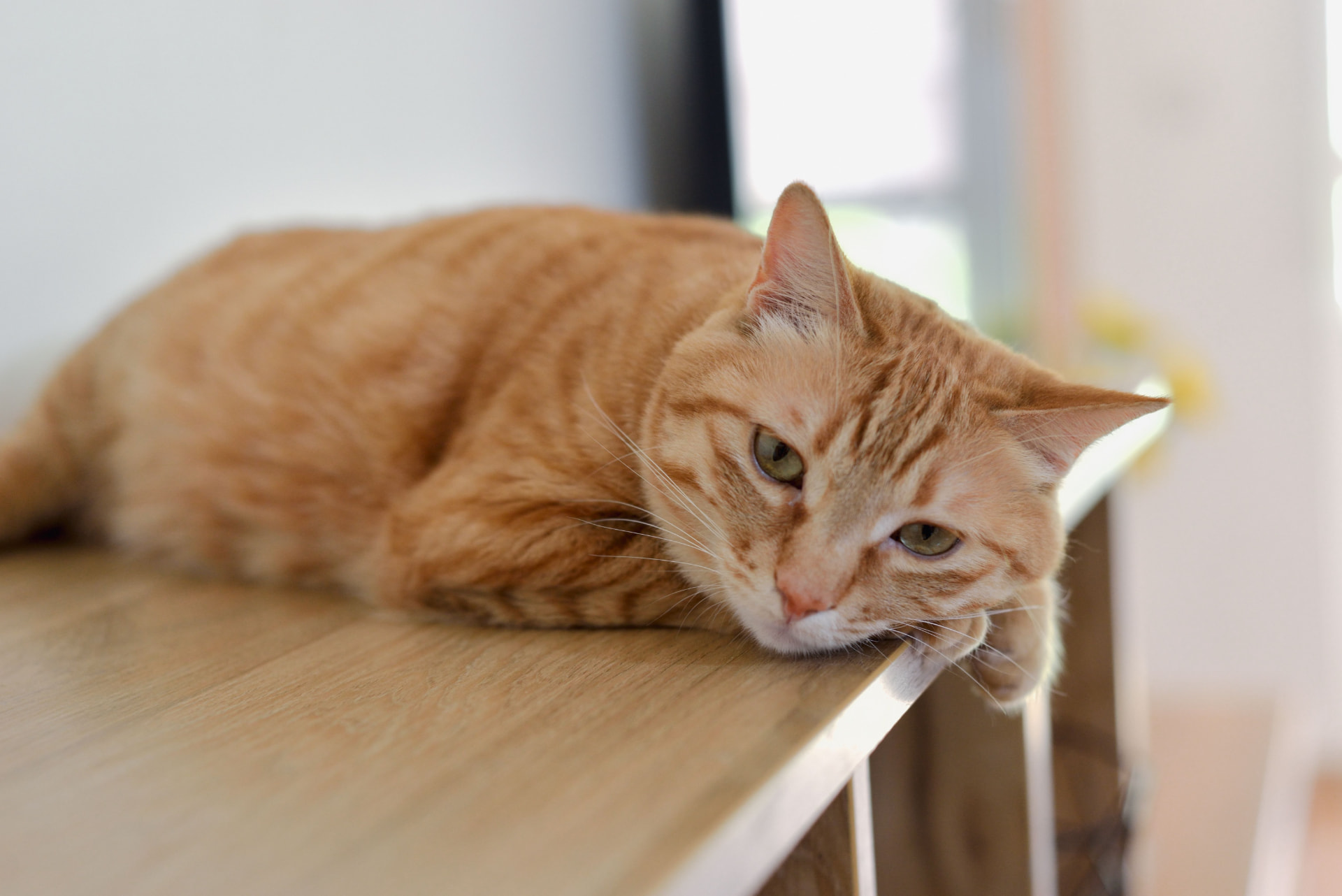
Boredom isn't one symptom. Look for patterns, changes, and whether your cat has useful outlets for normal feline behavior.
10 min read
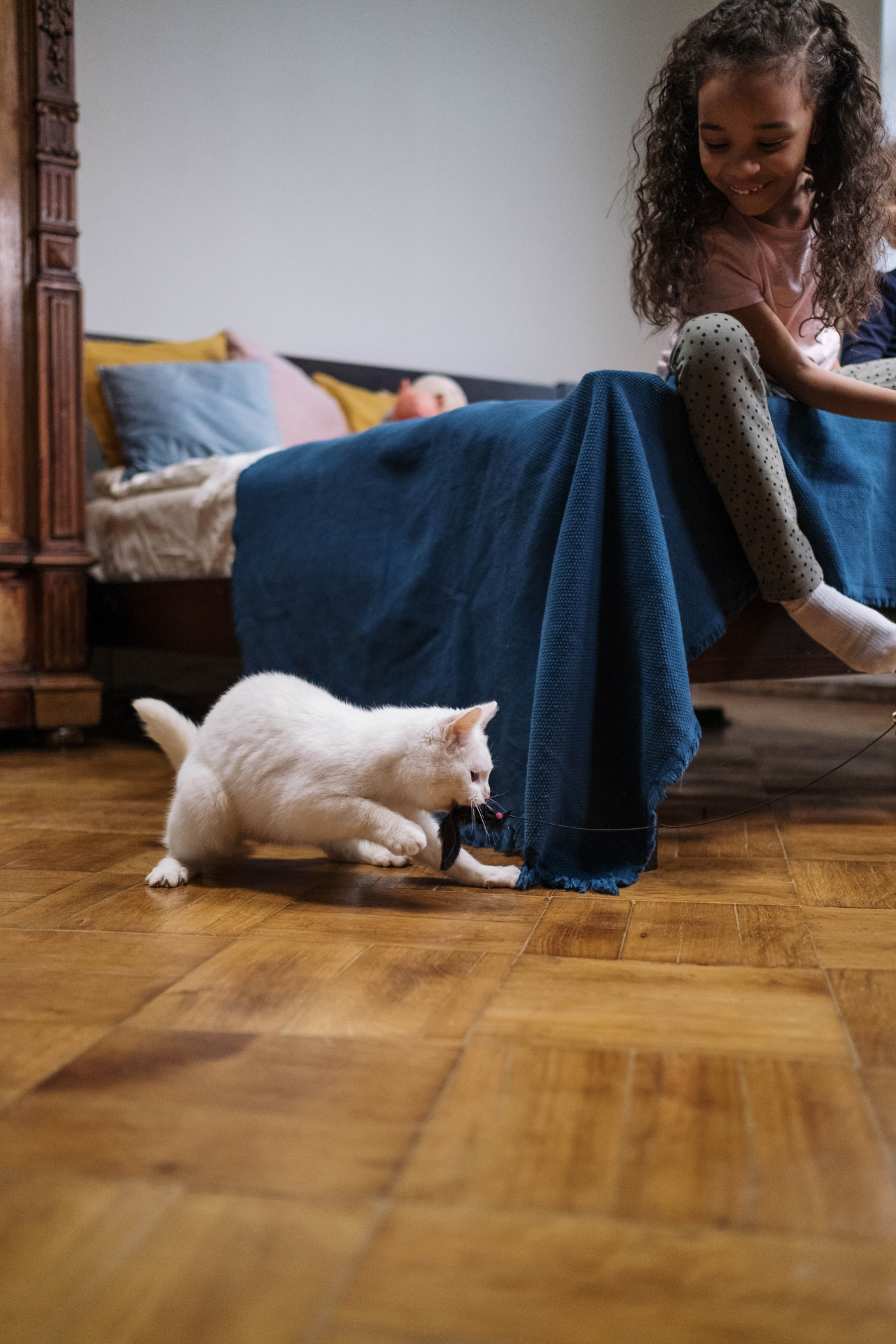
Two or three short play sessions a day is a useful adult-cat starting point, but the right routine depends on the cat rather than the stopwatch.
10 min read
Four cat trees compared on the things that matter after assembly: stability, usable perch space, scratching surfaces, construction, repairability and price.
11 min read
Get practical indoor-cat tips, helpful guides, and product recommendations delivered to your inbox.
A short email now and then. Unsubscribe any time.