
Cat Products
Should You Get an Automatic Feeder for Your Indoor Cat?
Automatic feeders can solve meal timing, portion and early-morning problems—but they're only worth buying if they fix a problem you actually have.
9 min read
Automatic cat feeders range from simple timers to Wi-Fi-connected machines that track meals, send notifications and apparently want to become the IT department of your kitchen.
This article contains affiliate links. If you make a purchase through one of these links, we may earn a commission at no additional cost to you.
Most cat owners don't need all of that.
They need something dependable that puts the correct amount of food in front of their cat at the correct time—preferably without requiring them to personally report for duty at 5:00 every morning.
After comparing current feeders, manufacturer specifications, prices, independent testing and real-owner complaints, we narrowed the field down to four.
And no, we're not giving every feeder an award just so we have more things to link to.
If you're still wondering whether you need a feeder at all, start with Should You Get an Automatic Feeder for Your Indoor Cat?.
If you're ready to buy one, here's where we'd start.
| Feeder | Best For | Food | App | Backup | Main Catch |
|---|---|---|---|---|---|
| PetSafe FlexFeed | Best overall | Dry | No | Yes | No remote control |
| PETLIBRO Granary | Smart features | Dry | Yes | Yes | More technology to depend on |
| Cat Mate C500 | Wet food | Wet or dry | No | Battery powered | Ice packs aren't refrigeration |
| SureFeed Microchip Feeder | Multiple cats | Wet or dry | No* | Battery powered | Expensive and not a timed dispenser |
*Some SureFeed models/connectivity options differ. The model recommended here is the standard Microchip Pet Feeder.
The most important feature in an automatic feeder is not a camera.
It's food actually appearing when it's supposed to.
We gave more weight to reliable scheduling, sensible portion control, backup power, cleaning, food compatibility and long-term practicality than to impressive-looking app features.
Price matters too.
A $200 feeder can absolutely make sense if it solves a $200 problem. If all you need is a measured breakfast while you're asleep, paying extra for facial recognition and cloud analytics may be solving a problem your cat did not know existed.
We also looked for repeated complaints from actual owners instead of relying entirely on product pages.
No feeder is perfect.
The goal is figuring out which compromises make sense for your household.
Best for: Most indoor cats eating dry food
Typical price: Around $60 at the time of research
Food: Dry
App: No
Power: Wall power with battery backup
Our overall pick is one of the least exciting machines on this list.
That's part of why we like it.
The PetSafe FlexFeed can schedule up to eight meals per day, offers multiple portion settings, holds about eight cups of food and includes a removable stainless-steel bowl that can go into the dishwasher.
More importantly, it doesn't need your Wi-Fi.
You program the schedule directly into the feeder, and PetSafe includes the option for battery backup if the power goes out.
For an appliance whose primary job is don't forget to feed the cat, fewer points of failure can be a very good thing.
You sacrifice remote changes and phone notifications. If you're at work and suddenly decide your cat deserves second lunch, you're out of luck.
We're comfortable with that.
For most people who simply want scheduled portions, several small meals throughout the day or an automatic early breakfast, the FlexFeed handles the core job without making the process more complicated than necessary.
That also makes it a natural fit if you've read How Often Should I Feed My Indoor Cat? and want to split the day's food into several smaller portions.
If you want full app control instead, that's where our next pick makes more sense.
Best for: Remote control and meal monitoring
Typical price: Around $90 at the time of research
Food: Dry
App: Yes
Power: Wall power plus three-D-cell emergency backup
The PETLIBRO Granary is what we'd choose when smart features are actually part of the reason you're buying the feeder.
The current Granary Smart Feeder has a 5-liter hopper, Wi-Fi control, feeding logs, scheduled meals, a stainless-steel bowl and notifications for things such as low food or blockages. It supports both 2.4 GHz and 5 GHz Wi-Fi and can continue carrying out saved meal schedules on emergency battery power even though Wi-Fi functions are disabled while running on batteries.
That's useful if you travel between work and home, want to check whether a meal dispensed, or need to adjust feeding times without standing in front of the machine.
There are two reasons it didn't take our overall spot.
First, portion sizes from hopper feeders can vary somewhat depending on the size and shape of the kibble. PETLIBRO itself specifies compatible kibble dimensions, and some owners have reported that actual portions differed from the expected amount.
Second, adding an app and cloud service adds another thing capable of having a bad day.
Recent users have reported service/connectivity problems, while other Granary owners report using theirs reliably for a year or more. We wouldn't write the product off because of a handful of Reddit threads, but we also wouldn't pretend those reports don't exist.
If you buy one, weigh a few test portions of your own kibble before trusting the serving setting blindly.
That's good practice with any hopper feeder.
If you're trying to determine the total daily portion first, see How Much Should I Feed My Indoor Cat Per Day?.
Best for: Scheduled wet-food meals
Typical price: Roughly $50 for the standard model at the time of research
Food: Wet or dry
App: No
Power: Three AA batteries
Wet food makes automatic feeding harder.
You can't exactly dump forty cans of pâté into a hopper and hope everyone involved has a nice week.
The Cat Mate C500 takes the simpler approach.
It uses a rotating tray with five food compartments. One is available immediately, and you can schedule the other four to rotate into position later.
Two reusable ice packs sit underneath the tray to help keep food cool, and the feeder can also be used with dry food. The manufacturer says three AA batteries can provide roughly 12 months of operation.
It's refreshingly low-tech.
There is no app to pair, account to create or Wi-Fi password to enter while your cat screams at you from three feet away.
And owners who've used the C500 for wet-food schedules frequently describe it as simple and reliable.
There is one major limitation:
The ice packs help keep food cooler. They are not a refrigerator.
Several owners report that the packs are best suited to meals later the same day or overnight rather than expecting them to keep wet food properly chilled through a multi-day absence.
That's how we'd use the C500 too: workdays, overnight meals, an early breakfast, or another predictable feeding window.
Not “see you Tuesday.”
If you're deciding whether wet food belongs in your cat's routine in the first place, see Wet vs. Dry Food for Indoor Cats: Which Is Better?.
Best for: Food stealing and different diets
Typical price: Expensive—often around $200 in current U.S. listings
Food: Wet or dry
App: Not required
Power: Four C batteries
This isn't really a timed automatic feeder.
We're including it because it solves one of the biggest problems people hope an automatic feeder will fix—and most timed feeders don't fix it at all.
Imagine carefully measuring breakfast for two cats.
The feeder dispenses both portions perfectly.
Then Kevin eats his breakfast and Susan's.
Technology has technically succeeded.
Your feeding plan has not.
The SureFeed Microchip Pet Feeder identifies the cat through a compatible implanted microchip or RFID collar tag and opens the bowl only for registered pets. It works with wet or dry food, holds around 400 ml and can remember multiple pet identities.
That makes it particularly useful when one cat grazes while another has apparently devoted its life to acquiring additional food.
It's also useful when cats need different diets.
The downside is cost, especially because households may ultimately need more than one feeder.
And it isn't completely immune to feline criminal ingenuity. Some owners report that a determined food thief learns to approach alongside the authorized cat while the bowl is open.
Backup power also matters.
If the feeder is responsible for meals while you're away, a power outage shouldn't immediately turn it into an expensive sculpture.
Then decide whether you really need an app.
Being able to check feeding history remotely is useful.
Being able to ask Alexa to give your cat a snack from the couch is... less essential.
Finally, consider the other cats in the house.
A regular automatic feeder controls when food appears.
A microchip feeder controls who can eat it.
Those are two very different problems.
For most indoor cats eating kibble, we'd start with the PetSafe FlexFeed. It's inexpensive enough, simple, offline and has backup power.
If remote control and notifications genuinely matter to you, spend more for the PETLIBRO Granary Smart Feeder.
If your cat eats wet food, the Cat Mate C500 is our current pick as long as you understand the limitation of ice-pack cooling.
And if you have multiple cats and the actual issue is one of them stealing everyone else's food, skip the ordinary timer feeders and look at the SureFeed Microchip Pet Feeder.
That's really the decision.
You don't need the feeder with the longest feature list.
You need the feeder that solves your particular cat problem.
Automatic feeders can make indoor-cat feeding dramatically easier, especially if you're splitting food into several smaller meals, working unpredictable hours or trying to stop breakfast from becoming a daily hostage negotiation.
But this is one product category where reliability matters more than novelty.
A camera failing is annoying.
An app notification failing is annoying.
Dinner failing is dinner failing.
Choose the simplest feeder that solves your actual problem, test it thoroughly while you're still home, confirm how much food it really dispenses and keep checking it regularly.
Your Urban Feline does not care whether the feeder has artificial intelligence.
They would just like the chicken delivered on time.
We research, write and update every guide on this site. Our articles are general educational information for cat owners and are reviewed against current guidance from veterinary and feline welfare organisations. Read our editorial policy.
Automatic feeders can solve meal timing, portion and early-morning problems—but they're only worth buying if they fix a problem you actually have.
9 min read
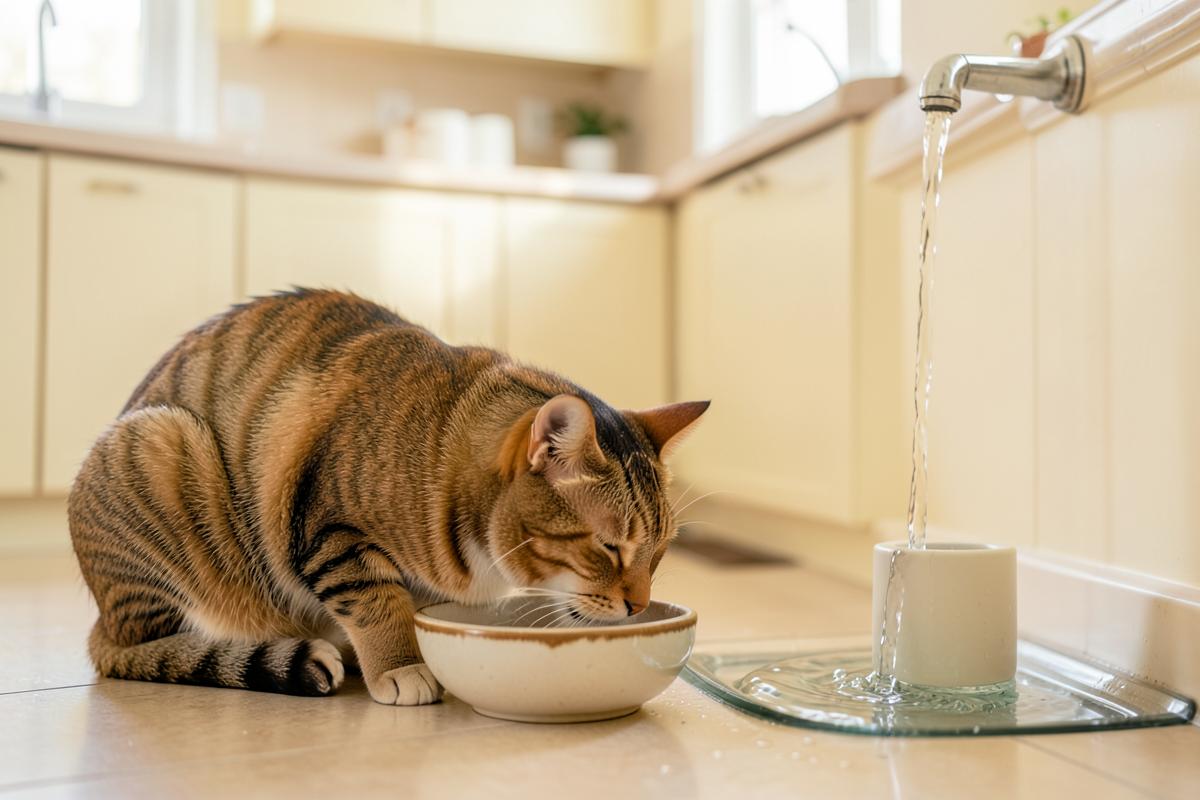
Two meals a day is a practical starting point for many adult cats, but smaller frequent meals can work too—without increasing the daily food total.
8 min read
Wet food wins on moisture while dry food wins on convenience. Here's how to choose—or combine them—without losing sight of calories and nutrition.
9 min read
Get practical indoor-cat tips, helpful guides, and product recommendations delivered to your inbox.
A short email now and then. Unsubscribe any time.