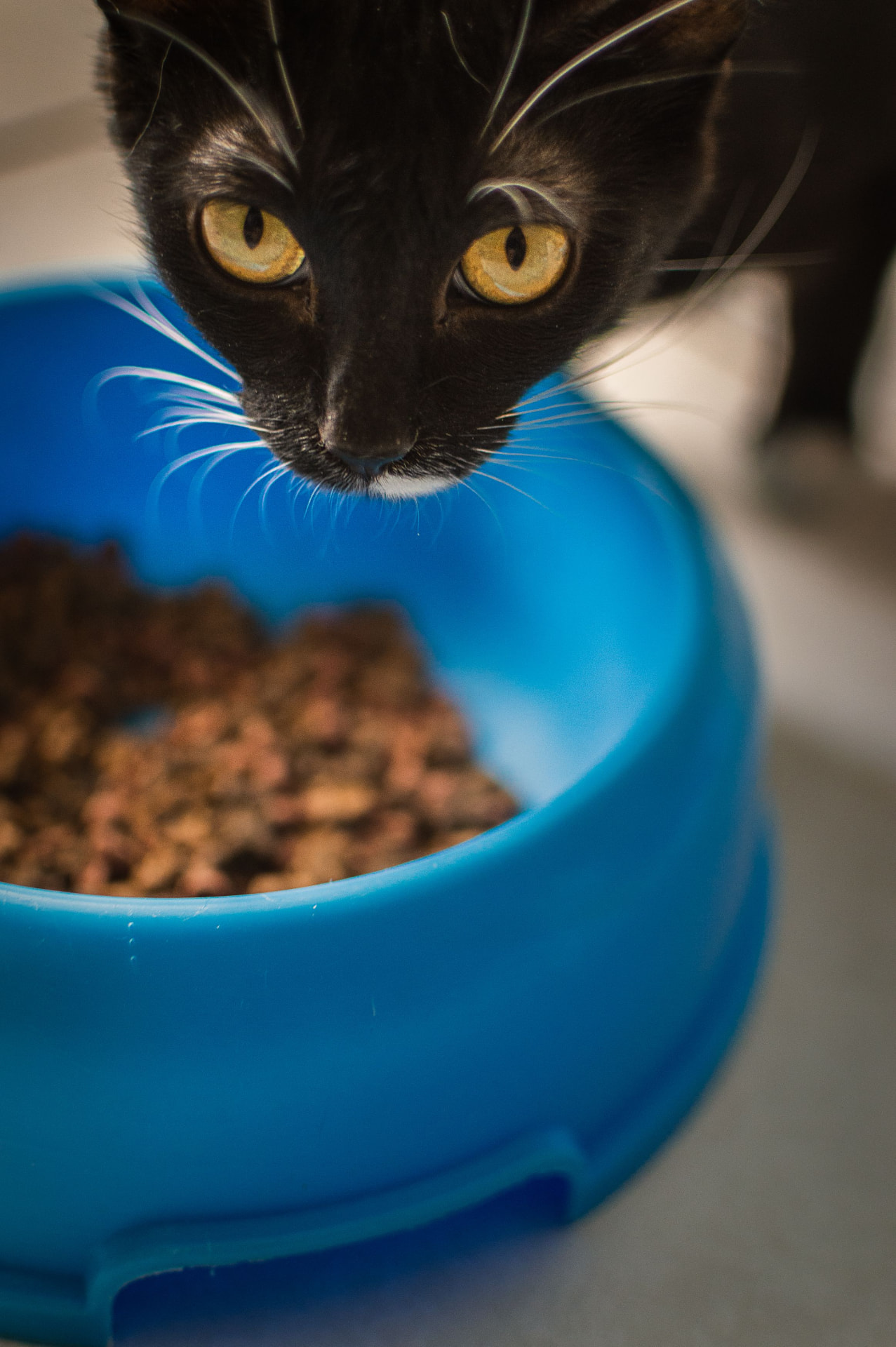
Cat Nutrition
How Much Should I Feed My Indoor Cat Per Day?
Use your cat's weight to estimate their daily calories, then turn that number into a measurable portion of wet or dry food.
7 min read
Walk into any pet food aisle and the choice gets complicated fast. Cans, pouches, kibble, “indoor formulas,” “high protein,” “grain-free,” and enough label claims to make you feel like you need a nutrition degree just to buy dinner.
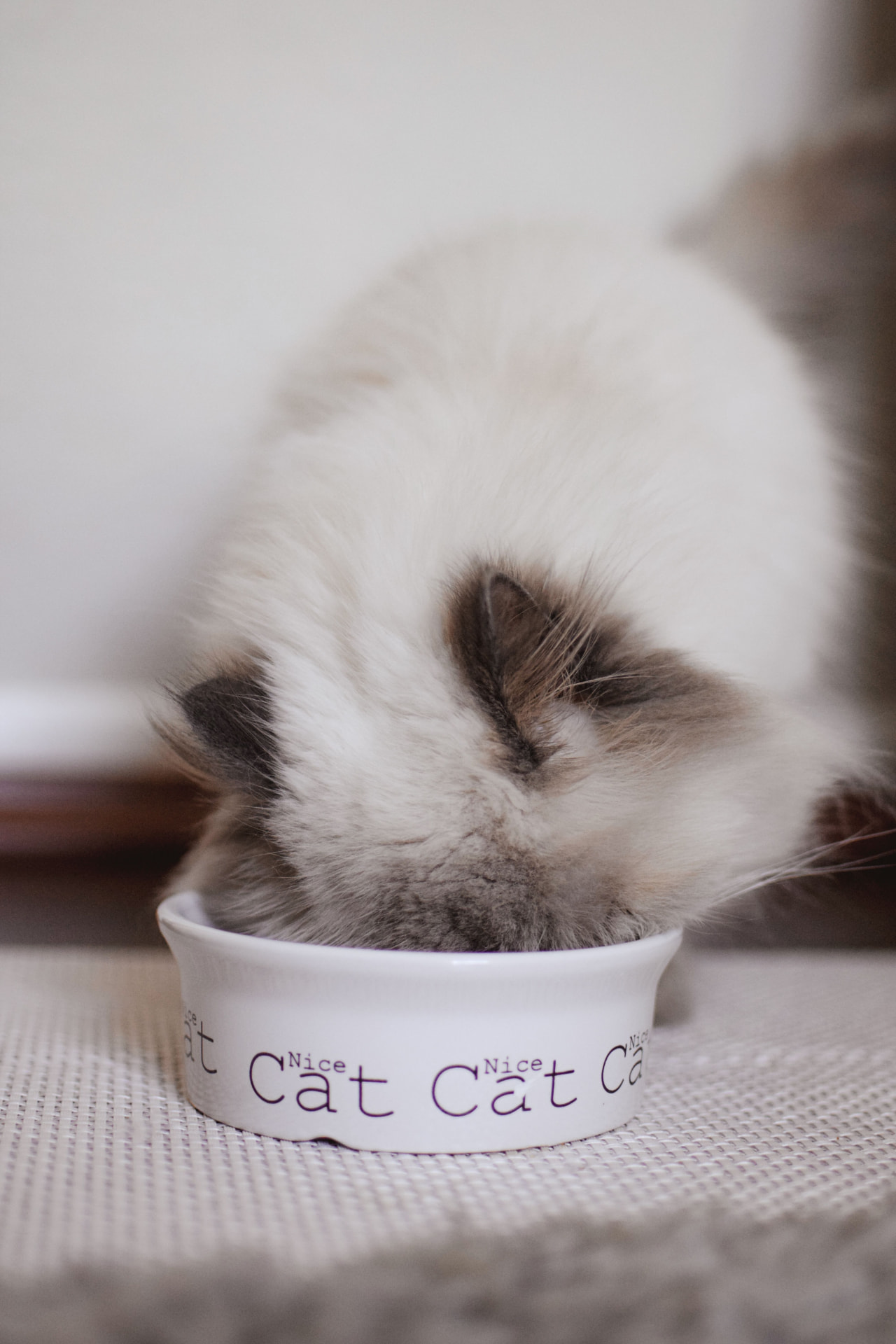
So which is actually better for an indoor cat: wet food or dry food?
For most healthy adult cats, there isn't one universal winner. A nutritionally complete and balanced diet can come in either form. Wet food has a clear advantage when it comes to moisture, while dry food is usually easier to store, easier to portion, and easier on the budget.
And for plenty of cats, the best answer may simply be: both.
What matters most is whether the food meets your cat's nutritional needs, fits your routine, and is being fed in an appropriate amount.
The biggest practical difference is water.
Wet food contains a lot of moisture, often around 70% to 80% or more depending on the product.
That means every meal gives your cat food and water at the same time.
Wet food also tends to be less calorie-dense by volume because so much of the can or pouch is water. Many cats also find it highly appealing, which can be helpful if you live with an Urban Feline who considers dinner unacceptable unless it smells expensive.
The tradeoff is that wet food usually costs more per calorie, and opened portions need to be refrigerated.
Dry food, or kibble, contains much less water—usually somewhere around 6% to 10%.
It's convenient, easy to store, works well in automatic feeders and puzzle toys, and is typically less expensive than feeding canned food exclusively.
But because dry food contains so little moisture, cats eating mostly kibble need to get more of their water by drinking.
Dry food is also generally more calorie-dense, which makes accurate portions especially important.
When it comes to moisture, wet food has the advantage.
Cats get water in two ways: by drinking it and through the food they eat. A cat eating wet food is already taking in a substantial amount of water during meals, while a cat eating dry food has to make up much more of that difference at the water bowl or fountain.
And as many cat owners know, cats aren't always enthusiastic about drinking just because a perfectly good bowl of water exists ten feet away.
That doesn't mean a cat eating dry food is automatically dehydrated. Many cats drink enough water on their own.
It simply means wet food makes it easier to increase the amount of water entering the diet.
Fresh water should still be available at all times, no matter what type of food your cat eats.
Sometimes, but the real issue is still total calories.
Because wet food contains so much water, it usually provides fewer calories in the same physical volume of food. That can be helpful for cats who do better with a larger-looking meal while staying within an appropriate calorie range.
Dry food packs more calories into a smaller amount.
That doesn't make kibble inherently fattening. The problem usually starts when portions become too generous—especially if the bowl gets topped off every time the cat looks personally offended by the sight of the bottom.
Free-feeding can also make it harder to know exactly how much a cat is eating.
If you're not sure how many calories your indoor cat should be getting in the first place, start with our guide How Much Should I Feed My Indoor Cat Per Day?.
Once you know your starting calorie target, you can divide those calories between wet food, dry food, or both.
This one gets repeated a lot.
Regular dry food should not be treated as a replacement for dental care.
It's true that certain veterinary dental diets are specially designed to create a mechanical cleaning effect when a cat chews them. But ordinary kibble and a purpose-built dental diet are not the same thing.
Some cats barely chew standard kibble at all.
So if you're choosing dry food mainly because you've heard it keeps a cat's teeth clean, that probably shouldn't be the deciding factor.
Dental health deserves its own care plan regardless of what's in the food bowl.
No.
A properly formulated dry food that is complete and balanced for your cat's life stage can be a perfectly reasonable choice for a healthy indoor cat.
Dry food gets criticized because it contains less moisture and can make overeating easier if portions aren't controlled. Those are legitimate considerations, but they don't mean kibble itself is automatically unhealthy.
If your cat eats dry food, focus on the things that actually matter: appropriate portions, access to fresh water, overall body condition, and whether the food provides complete nutrition.
The format of the food is only one part of the picture.
| Factor | Wet Food | Dry Food |
|---|---|---|
| Moisture | High | Low |
| Cost | Usually higher | Usually lower |
| Storage | Refrigerate after opening | Easy to store |
| Calorie density | Usually lower by volume | Usually higher |
| Convenience | Moderate | Very convenient |
| Automatic feeders | Requires wet-food-compatible feeder | Works very well |
| Hydration support | Strong advantage | Cat must drink more separately |
| Palatability | Often very appealing | Depends on the cat |
There isn't a universal winner here. It depends on what matters most for your cat and your household.
Absolutely.
In fact, mixed feeding can be a very practical option.
Wet food adds moisture to the diet, while dry food gives you convenience and flexibility. Kibble can work well in puzzle feeders or automatic feeders, while wet food can make up the main meal.
The important part is remembering that both foods count toward the same daily calorie total.
If your cat needs around 200 calories per day and gets 100 calories from wet food, you don't then add a full 200-calorie serving of kibble on top.
You'd use roughly the remaining 100 calories for the dry portion.
No feline algebra exam required.
The mistake to avoid is feeding a full daily serving of wet food plus a full daily serving of dry food just because the packages list them separately.
The most important thing isn't whether the food comes in a can or a bag.
Look for a nutritional adequacy statement showing that the food is complete and balanced for your cat's appropriate life stage.
You should also check the calorie information. Depending on the product, calories may be listed per can, pouch, cup, kilogram, or serving.
That number becomes especially important if you're combining different foods.
And try not to get distracted by every impressive-sounding word on the front of the package. Terms like “premium” or “natural” may sound reassuring, but they don't automatically tell you whether the food is nutritionally appropriate for your cat.
The useful information is usually on the back.
If we had to give wet food one clear win, it would be moisture.
That can make wet food especially appealing for cats who don't drink much or for owners who want to increase dietary water.
Dry food, however, wins on convenience, storage, cost, and compatibility with automatic feeders and food puzzles.
And combining the two can give you some of the benefits of each.
So the better question may not be, “Which one is best?”
It may be:
Which feeding setup works best for my cat while keeping nutrition, calories, hydration, and my actual daily routine in balance?
Cats with medical conditions such as kidney disease, diabetes, urinary problems, food allergies, or medically managed obesity may need a more specific diet. In those cases, the decision should be made with your veterinarian rather than based on a general wet-versus-dry comparison.
Wet food isn't automatically healthy, and dry food isn't automatically bad.
Wet food provides much more moisture. Dry food is cheaper and easier to use. Both can provide complete nutrition when they're properly formulated, and many indoor cats do perfectly well eating a combination.
Whichever route you choose, portions still matter.
If you haven't figured out how much your cat should be eating each day, start with How Much Should I Feed My Indoor Cat Per Day?.
Because choosing the food is only half the job.
Figuring out how much of it to put in the bowl is where your cat starts judging your life choices.
We research, write and update every guide on this site. Our articles are general educational information for cat owners and are reviewed against current guidance from veterinary and feline welfare organisations. Read our editorial policy.
Use your cat's weight to estimate their daily calories, then turn that number into a measurable portion of wet or dry food.
7 min read

Two meals a day is a practical starting point for many adult cats, but smaller frequent meals can work too—without increasing the daily food total.
8 min read
Get practical indoor-cat tips, helpful guides, and product recommendations delivered to your inbox.
A short email now and then. Unsubscribe any time.