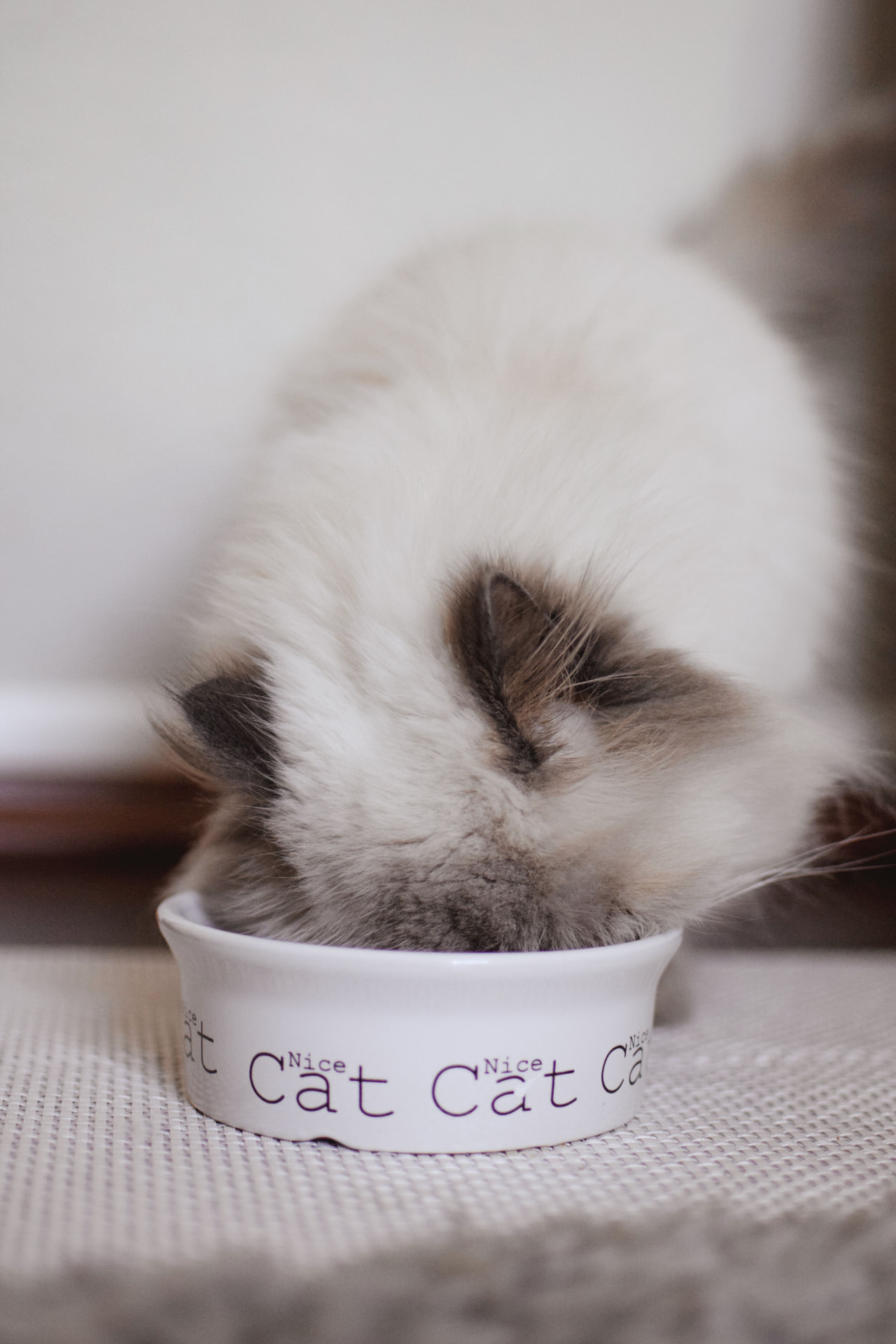
Cat Nutrition
Wet vs. Dry Food for Indoor Cats: Which Is Better?
Wet food wins on moisture while dry food wins on convenience. Here's how to choose—or combine them—without losing sight of calories and nutrition.
9 min read
Low water intake is a quiet risk for indoor cats. Most fixes are about removing small obstacles rather than persuading the cat of anything.
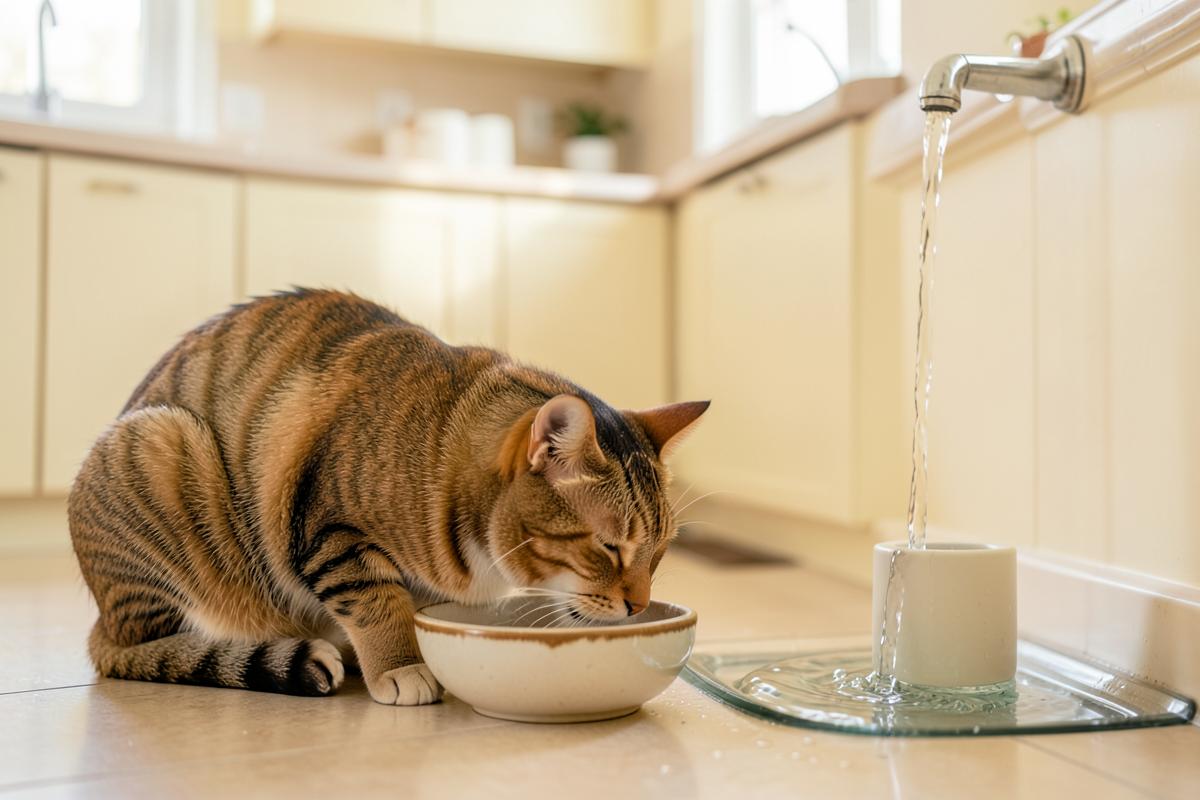
Cats evolved taking most of their moisture from prey, so thirst does not fully compensate for a dry diet. Whiskers touching the sides of a deep narrow bowl and water sitting next to food also put many cats off.
Sudden thirst changes matter
A noticeable increase in drinking and urination can be an early sign of conditions such as kidney disease, diabetes or thyroid problems. Report it to your veterinarian rather than monitoring it indefinitely at home.
Measure water into the bowl and measure what remains after 24 hours, or count the number of urine clumps in the litter box each day. Both are rough but useful trends.
We research, write and update every guide on this site. Our articles are general educational information for cat owners and are reviewed against current guidance from veterinary and feline welfare organisations. Read our editorial policy.
Wet food wins on moisture while dry food wins on convenience. Here's how to choose—or combine them—without losing sight of calories and nutrition.
9 min read
Why indoor cats gain weight, how to assess body condition at home, and how to lose it slowly and safely with veterinary oversight.
8 min read

What you genuinely need before a cat arrives, what can wait, and what most new owners buy and never use.
6 min read
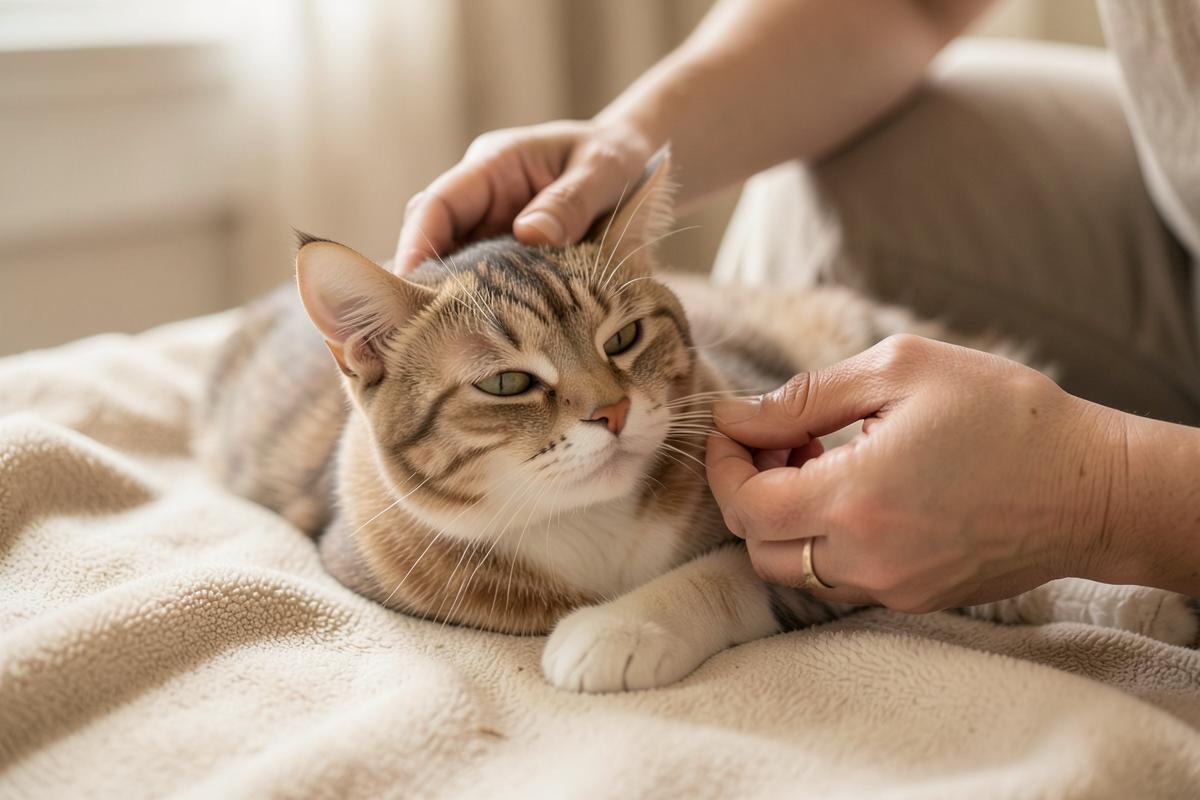
A five-minute monthly check that helps you notice change early, plus a plain list of signs that mean booking a vet appointment.
7 min read
Get practical indoor-cat tips, helpful guides, and product recommendations delivered to your inbox.
A short email now and then. Unsubscribe any time.