Cat Nutrition
How Much Should I Feed My Indoor Cat Per Day?
Use your cat's weight to estimate their daily calories, then turn that number into a measurable portion of wet or dry food.
7 min read
If you have a cat who begins campaigning for dinner two hours early, you may have already discovered an important fact about feline nutrition:
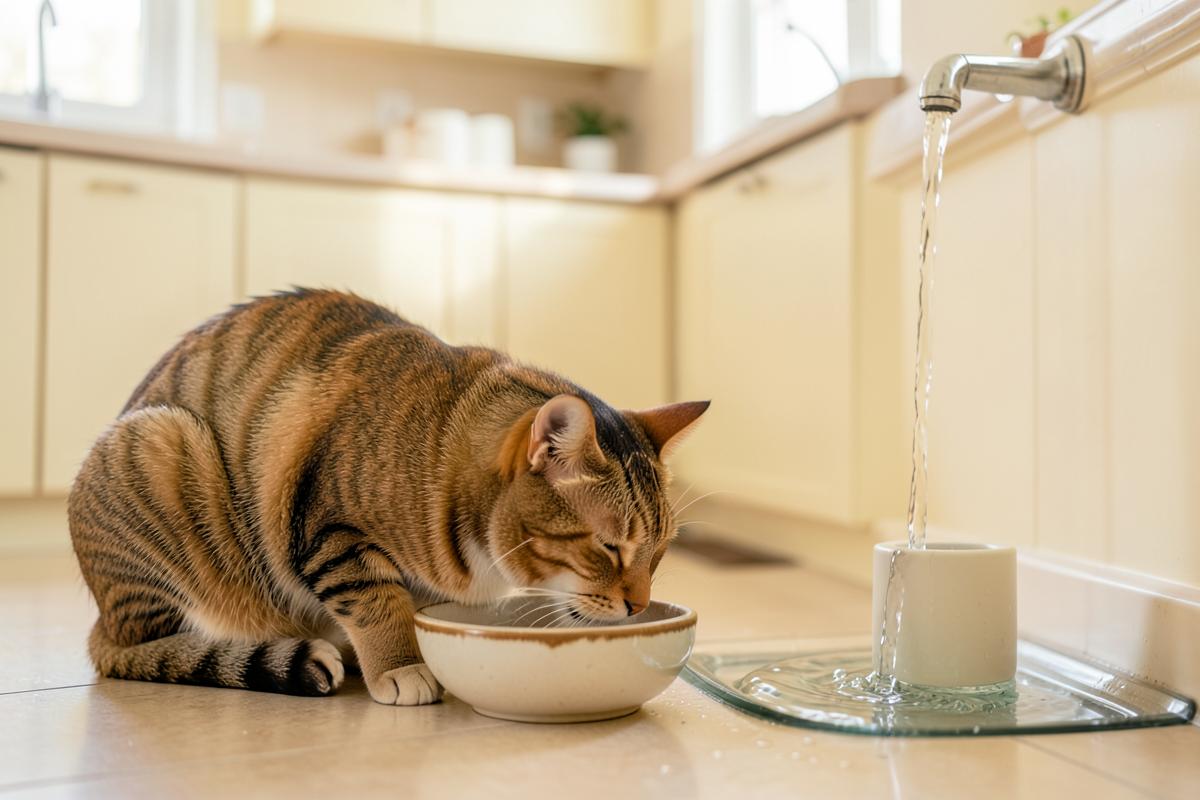
Your cat has opinions about the schedule.
Strong ones.
But how often does an indoor cat actually need to eat?
For most healthy adult indoor cats, two portion-controlled meals per day is a perfectly reasonable starting point. Some cats also do well with three, four, or even more smaller meals spread throughout the day.
The important part is that adding more meals doesn't mean adding more food. You're dividing the same daily amount into smaller portions.
So if your cat is convinced six dinners per day are medically necessary, there is unfortunately some bad news.
For a healthy adult cat, feeding once or twice per day can meet nutritional needs, but twice daily is an easy and practical routine for most households.
For example:
That's enough for plenty of cats.
But cats naturally tend to eat smaller amounts more frequently rather than sitting down for one enormous meal. Because of that, dividing their food into several smaller meals can also work very well, especially for an indoor cat.
You could feed breakfast and dinner yourself, then use a timed feeder for a smaller midday or overnight portion.
The key is keeping all of those meals within your cat's total daily food allowance.
If you don't know how much your cat should be eating in an entire day yet, start with How Much Should I Feed My Indoor Cat Per Day? before worrying about how many bowls to divide it into.
Age does make a difference.
Young kittens need more food relative to their body size because they're growing rapidly, and they generally need to eat more frequently than adults.
Kittens under about six months often do well with around three meals per day, with very young kittens sometimes needing even more frequent feeding.
From around six months to adulthood, twice-daily feeding becomes a practical schedule for many cats.
Once your cat reaches adulthood, two daily meals can remain the routine indefinitely if it's working.
Healthy senior cats don't automatically need more or fewer meals simply because they're older. But changes in appetite, weight, dental health, or medical conditions may make a different schedule more appropriate.
For many healthy adult cats, yes.
It's easy to hear that cats prefer frequent small meals and conclude that you're supposed to stand in the kitchen serving tiny plates of pâté every 90 minutes.
You're not.
There is a difference between what cats might naturally choose to do and what owners can realistically provide.
A morning and evening meal gives your cat a consistent routine and makes portion control relatively straightforward. If your cat maintains a healthy body condition, eats normally, and seems comfortable with that schedule, there's no reason to complicate it just for the sake of adding meals.
They can be.
Giving your cat several smaller meals throughout the day can provide more feeding opportunities without increasing calories.
For an indoor cat, that's particularly interesting because eating can become part of the day's enrichment.
Instead of putting the entire portion into one bowl, part of the meal could come from a puzzle feeder. A few portions could be delivered by an automatic feeder at different times. Dry food can even be placed in appropriate locations around the home to encourage a little searching and foraging.
That turns food from something that simply appears in a bowl into an activity.
Just remember the rule:
More meals does not mean more calories.
If your cat gets four meals instead of two, divide the existing daily amount into four portions.
Leaving food available all day is usually called free-feeding or free-choice feeding.
Some cats can regulate themselves reasonably well this way.
Others absolutely cannot.
For an indoor cat with easy access to food and not much else going on, a permanently full bowl can turn eating into entertainment. It also makes it much harder for you to tell exactly how much your cat consumed.
That's why portion-controlled feeding is often the more useful approach.
You measure the day's food, divide it into meals, and know how much went into the cat rather than continuously topping off a bowl.
That information becomes especially useful if your cat starts gaining or losing weight.
Not dramatically.
Both wet and dry food can be divided into scheduled meals.
Dry food is particularly convenient if you want to use an automatic feeder or puzzle feeder because it's easy to dispense and doesn't require refrigeration.
Wet food works well for regular scheduled meals and provides much more moisture through the diet.
And you don't necessarily have to choose one or the other.
Plenty of cats eat a combination.
If you're still deciding which makes more sense for your cat, read Wet vs. Dry Food for Indoor Cats: Which Is Better?.
Whichever you choose, wet and dry food still count toward the same total daily calorie intake.
First, don't assume begging automatically means your cat needs more calories.
Some cats simply discover that yelling at a human near the kitchen occasionally produces food.
And once that strategy works, they tend to remember it.
If your cat is getting an appropriate daily amount but seems hungry between two larger meals, try splitting the same amount into three or four smaller meals.
A puzzle feeder can make part of the ration last longer while giving the cat something to do.
A timed automatic feeder can also be surprisingly useful if your cat regularly wakes you at 5:00 a.m. demanding breakfast.
Instead of teaching:
Wake human → human provides food
the feeder becomes the thing that delivers breakfast.
Your sleep schedule may appreciate this development.
Most people aren't home all day waiting to serve lunch to a cat.
That's where automatic feeders can become genuinely useful rather than just another cat gadget.
A timed feeder can split the daily ration into smaller meals, deliver food while you're at work, provide an early-morning meal without waking you, and make feeding times more consistent.
Dry food is the easiest option for most automatic feeders, although some models are designed specifically to keep wet food usable between meals.
We'll cover whether buying one actually makes sense in Should You Get an Automatic Feeder for Your Indoor Cat?.
For now, just know that feeding several small meals doesn't require you to personally serve every one of them.
A routine that works for one cat won't work for every cat forever.
You may need to rethink the schedule if your cat:
A noticeable change in appetite—especially a cat suddenly refusing food—deserves more attention than simply adjusting the clock.
Cats with conditions such as diabetes, kidney disease, or medically managed obesity may also need a feeding plan tailored to their treatment. That's the point where your veterinarian's advice matters more than a general feeding schedule from the internet.
For most healthy adult indoor cats, two portion-controlled meals per day is a simple and practical starting point.
If your cat seems happier eating smaller amounts more frequently, you can divide that same daily food allowance into three, four, or more meals.
Puzzle feeders and automatic feeders can make those extra feeding opportunities useful enrichment without turning you into a full-time feline waiter.
The number of meals matters less than getting the bigger picture right:
Feed an appropriate total amount, keep the routine reasonably consistent, monitor your cat's weight and condition, and adjust when your actual cat gives you a reason to.
Because no matter how convincing the performance beside the food bowl may be, “I haven't eaten in my entire life” is not always a reliable medical history.
We research, write and update every guide on this site. Our articles are general educational information for cat owners and are reviewed against current guidance from veterinary and feline welfare organisations. Read our editorial policy.
Use your cat's weight to estimate their daily calories, then turn that number into a measurable portion of wet or dry food.
7 min read
Wet food wins on moisture while dry food wins on convenience. Here's how to choose—or combine them—without losing sight of calories and nutrition.
9 min read
Get practical indoor-cat tips, helpful guides, and product recommendations delivered to your inbox.
A short email now and then. Unsubscribe any time.