Puzzle and slow feeders
Puzzle Feeders for Indoor Cats (Buying Guide)
A cat in the wild works for a dozen small meals a day. A bowl removes all of that effort, which is one reason bored indoor cats overeat and then nap for sixteen hours. A puzzle feeder puts a little of the work back.
Affiliate link — as an Amazon Associate we may earn from qualifying purchases, at no extra cost to you. See our affiliate disclosure.
Why we recommend this one
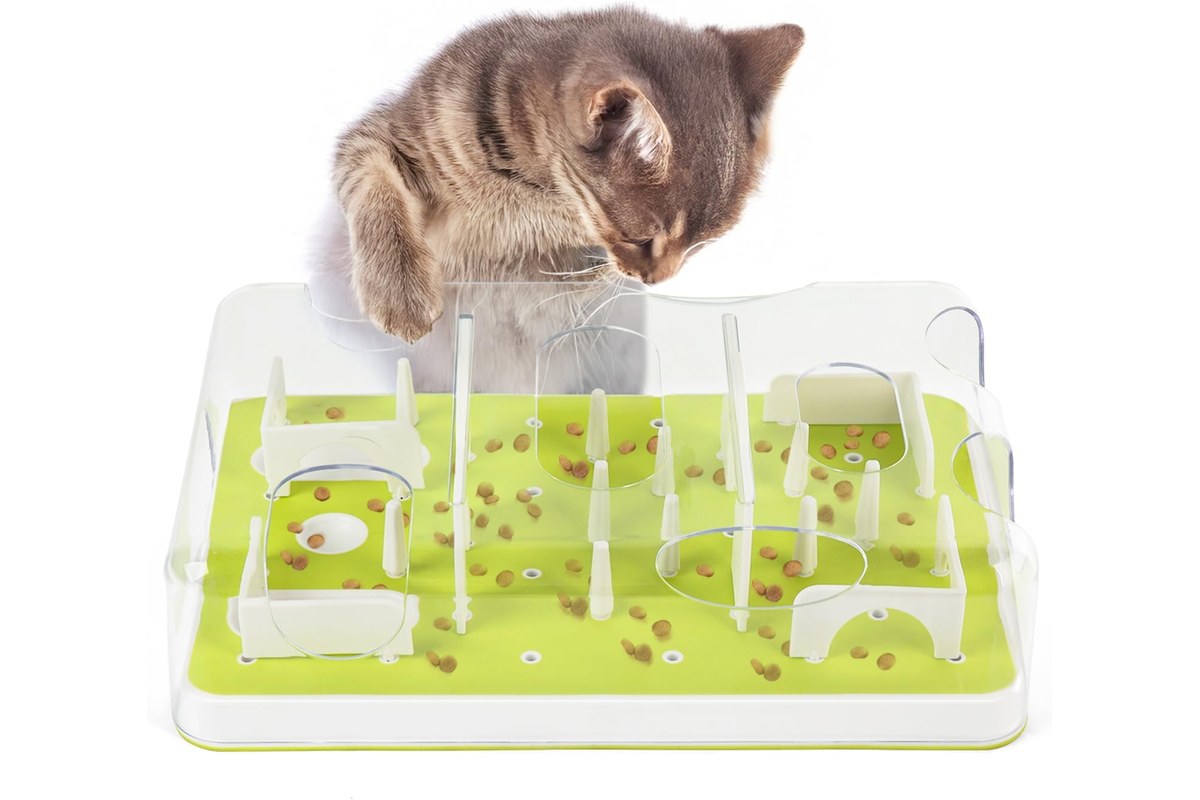
Interactive cat puzzle feeder with multiple treat compartments
A single board that hides food behind several different mechanisms, so the cat has to work out sliders, tracks and open wells rather than repeating one trick.
- Several kinds of problem in one board
- Sliding lids, shallow tracks and covered wells each need a different paw or nose action, so the cat keeps having to think instead of settling into a habit.
- Difficulty grows with the cat
- Start by loading only the open sections, then add the covered ones as your cat gets confident. That keeps early wins easy and later meals interesting.
- Genuinely fun to watch
- Working out a new compartment is the closest most indoor cats get to a hunt, and it is entertaining from the sofa as well as good for the cat.
What to look for
- Start easy
- A first puzzle should give food up almost immediately. Cats give up quickly on hard puzzles and then avoid them.
- Dishwasher-safe and simple to fill
- If refilling and washing is a chore, you will stop using it by week two.
- Wet-food compatible if you feed wet
- Most rolling and tumbling puzzles suit dry food only. Look for a flat lick-mat or tray style for wet food.
- Adjustable difficulty
- Removable pegs or covers let the puzzle grow with your cat instead of being outgrown in a week.
What to avoid
- Buying a hard puzzle first and concluding your cat is not interested.
- Adding extra food on top of meals — puzzle food comes out of the daily ration.
- Sharp edges or small detachable parts.
Getting it right at home
- Start with the puzzle half-open so food falls out easily.
- Use part of the normal daily ration, not extra treats.
- Rotate two or three puzzle types to keep it interesting.
- Wash daily if you use wet food.
Affiliate link — as an Amazon Associate we may earn from qualifying purchases, at no extra cost to you. See our affiliate disclosure.
Frequently asked questions
- Will a puzzle feeder help my cat lose weight?
- It slows eating and adds activity, which helps — but portion control and a vet-guided plan do the actual work.
- My cat gives up straight away.
- The puzzle is too hard. Make it as easy as possible, let the cat succeed several times, then increase difficulty slowly.
- Can I use one in a multi-cat home?
- Give each cat their own puzzle in separate spots, otherwise the fastest eater takes both portions.
Read next
Other buying guides
Better Cat Care, Delivered
Get practical indoor-cat tips, helpful guides, and product recommendations delivered to your inbox.
A short email now and then. Unsubscribe any time.