Cat Health
Simple At-Home Health Checks for Indoor Cats
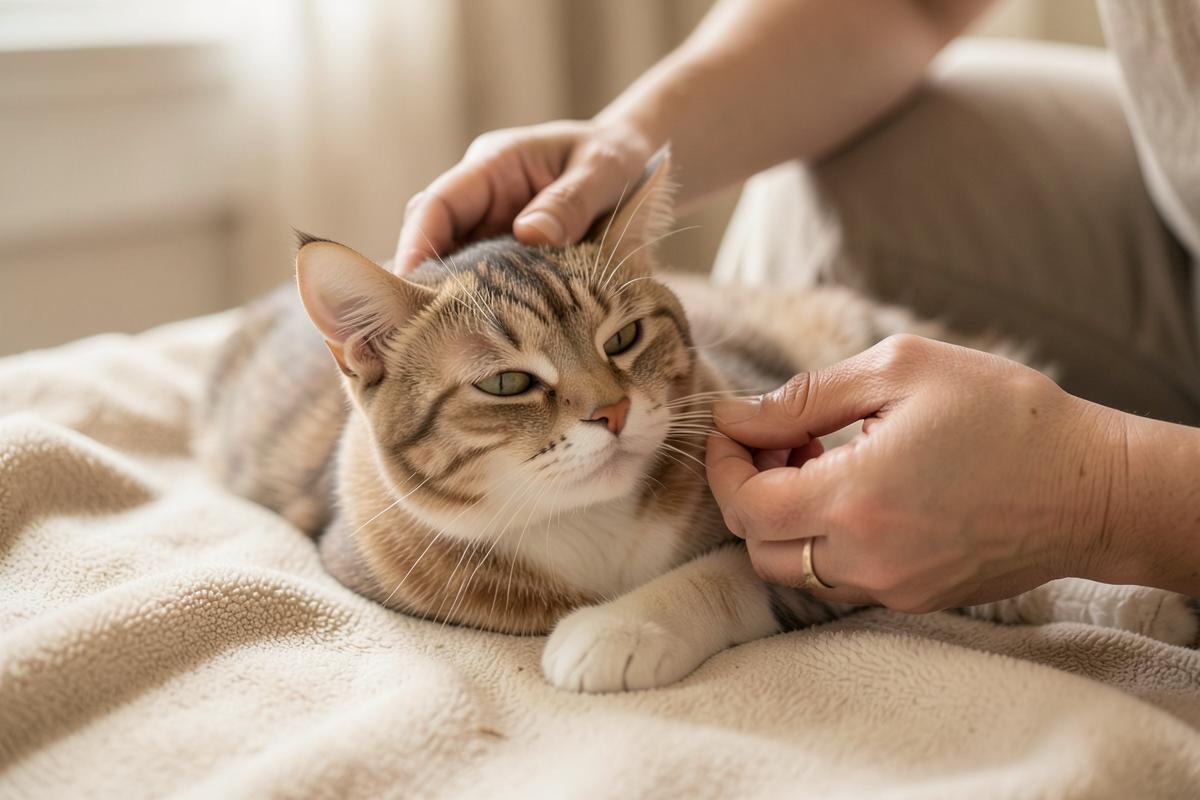
A five-minute monthly check that helps you notice change early, plus a plain list of signs that mean booking a vet appointment.
7 min read
An easy cleaning schedule, a proper full wash, and a fresher home—without making litter-box care more complicated than it needs to be.
The quick answer
Scoop your cat’s litter box at least once a day; morning and evening is a useful routine. For a standard box, a weekly litter change and wash is a straightforward starting point. Non-clumping clay often needs replacing more frequently, while some well-maintained clumping litters can last longer. Clean sooner whenever the remaining litter is wet, soiled, or still smells after scooping.
Daily scooping is the consistent recommendation. Full-change schedules vary: Cats Protection recommends a weekly clean, while feline veterinary guidance allows a one-to-four-week washing interval. The right interval depends on the litter and how heavily the box is used.
The most useful question is what needs cleaning today: the waste, the litter, the box itself—or all three.
Use this as a starting routine for a healthy cat. Your veterinarian’s instructions take priority during illness, and automatic boxes need their own maintenance schedule.
| Task | Starting schedule | Do it sooner when… |
|---|---|---|
| Scoop poop and urine clumps | At least daily; aim for morning and evening | Waste builds up, several cats favor one box, or your cat wants a clean box after each visit |
| Check the litter level | After scooping; top up as needed | Removing waste leaves too little litter for the product to work properly |
| Replace non-clumping clay litter | About twice a week | It becomes damp, smelly, or heavily soiled |
| Replace clumping litter and wash a standard box | Weekly is a simple starting point; some setups allow longer | Odor remains after scooping, clumps break down, or residue builds up |
| Check crystal or pellet litter | Daily; replace according to that product’s instructions and condition | It reaches its saturation or replacement indicator, smells, or stays wet |
| Inspect an automatic litter box | Daily; empty waste and clean components as its manual directs | Waste accumulates, a cycle fails, surfaces are soiled, or odor develops |
Humane World for Animals gives twice-weekly replacement for clay litter and two-to-three-week replacement for clumping litter that is scooped daily. These are starting intervals, not a reason to keep using a dirty batch.
Adding fresh litter does not restart the cleaning clock. Write down the date of the last complete change if you tend to lose track.
It is easy to say “I cleaned the litter box” when all you did was remove a few clumps. That job matters, but it leaves the rest of the setup in place.
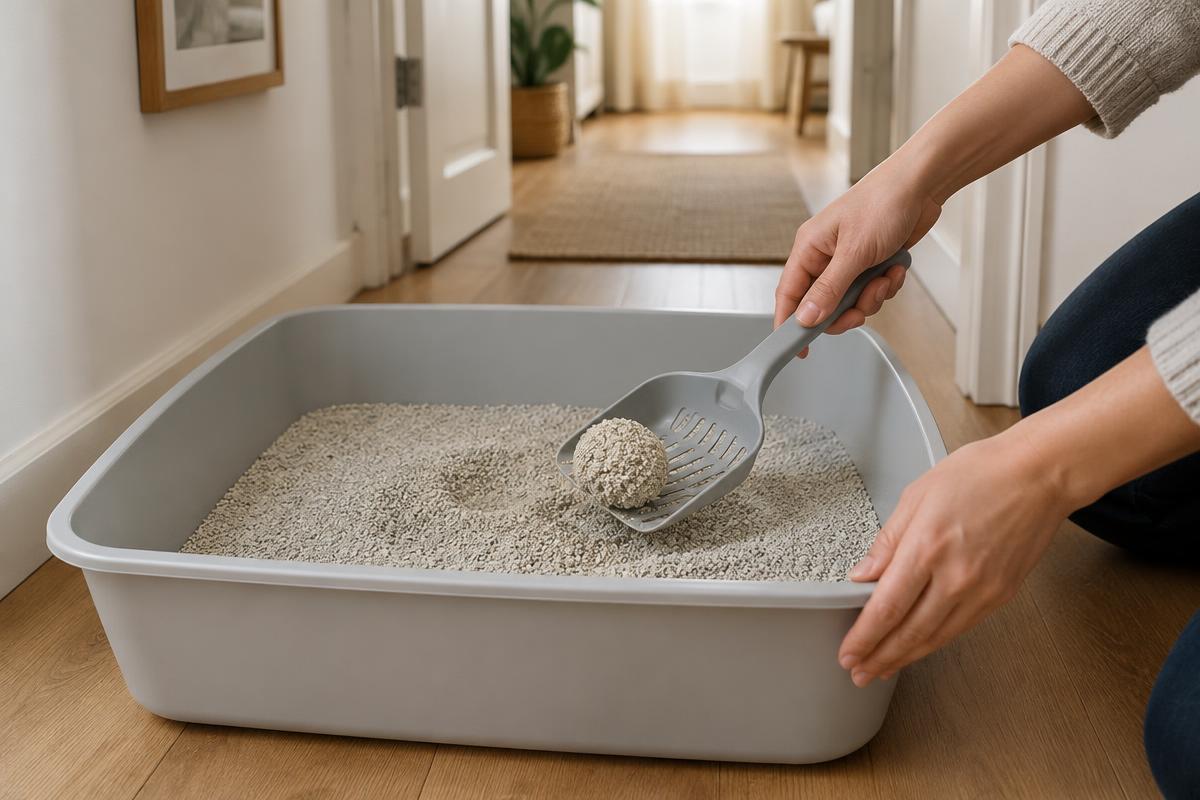
Scooping removes poop and, with clumping litter, the clumps formed by urine. Work across the whole box, including the corners and your cat’s favorite spot. Lift clumps carefully rather than breaking them into smaller pieces that fall through the scoop.
Topping up replaces the clean litter lost during scooping. Add enough to restore the appropriate depth for your product and your cat. More litter does not eliminate the need to remove waste.
A full change and wash means emptying the box, cleaning the exposed surfaces, rinsing, drying, and refilling with fresh litter. Pouring new litter onto a dirty base skips the part that removes stuck-on residue.
Cornell’s litter-box guidance recommends daily waste removal for clumping litter and washing the box with a gentle detergent before drying and refilling it.
Clumping litter makes it possible to remove much of the urine-soaked material each day. That is why a carefully maintained box may go longer between full changes than one filled with ordinary non-clumping clay.
Start with a weekly reset if you are establishing a routine or dealing with odor. If your litter’s instructions allow longer, assess the remaining litter daily. A dry-looking surface is not enough if the bottom is sticky or the corners contain crumbling waste.
Veterinary washing recommendations span one to four weeks, but the longest interval is not a target to reach. A busy box or a cat that dislikes any residue may need attention much sooner. Feline veterinary guidance.
You can scoop out poop, but absorbed urine remains in the litter rather than forming removable clumps. Plan on replacing the batch about twice a week, and adjust sooner if it is wet or smells. Simply removing visible poop will not maintain this litter indefinitely. Humane World for Animals.
Follow the particular product’s instructions for stirring and replacement. For example, PetSafe’s crystal-litter guidance explains that stirring redistributes saturated crystals and that humidity can shorten tray life.
In a manual box, remove poop daily. Check the whole litter bed, especially if your cat urinates in one corner. Replace it when the manufacturer’s replacement indicator is reached or sooner if it is soiled, saturated, or persistently smelly. A claim that litter lasts for weeks does not mean you can leave the box unchecked for weeks.
The material name alone does not tell you the cleaning method: some products clump, while others absorb urine and change texture.
Pine pellets, for example, can break down into sawdust. Feline Pine’s instructions specify daily solid-waste removal and replacement when the box is about 90% sawdust. That threshold belongs to that product; do not apply it to every pellet or paper litter.
Follow the bag and, if you use a sifting tray, its instructions too. Check any lower collection tray instead of judging cleanliness only by the pellets on top.
The useful number is how many cats actually use each box. Three available boxes do not guarantee that the work is divided evenly.
A common recommendation is one litter box per cat, plus one extra, placed in different locations. For two cats, that means three boxes. Separate locations also give cats alternatives if another pet makes access uncomfortable. Cornell’s guidance for new cat owners and Cats Protection’s cat-care guide.
For a home with multiple cats, use morning and evening scooping as your starting routine and inspect the busiest box more often. If one tray fills quickly while another stays untouched, review the second tray’s location and accessibility. It may be inconvenient, noisy, or difficult to approach.
For a kitten or a cat with limited mobility, easy access matters alongside cleanliness. A low entry can make the difference between an available box and a usable one. Cornell’s senior-cat guidance explains how joint pain can interfere with litter-box access.
For routine cleaning of a standard, non-electric box, gather a waste bag, mild unscented soap, water, a dedicated brush or sponge, and something clean for drying. Keep another clean box available while this one is out of use.
VCA recommends warm, soapy water for litter boxes, lids, and scoopers. Ordinary washing and disinfection are different tasks; if your cat has an infectious illness, ask your vet which additional cleaning measures are needed.
Choose mild, unscented soap for routine washing. Skip strongly perfumed cleaners and ammonia-based products. Do not add fragrance to cover an unresolved odor. Feline veterinary litter-box guidance advises avoiding strong chemicals and ammonia-based cleaners.
Never mix bleach with ammonia or other cleaners. The CDC’s cleaning-safety guidance warns against these combinations. If a vet recommends a disinfectant for a particular illness, follow the product’s dilution, contact-time, and rinsing instructions exactly.
Before buying a different litter or adding a deodorizer, find where the smell is coming from. This troubleshooting order helps you check the parts daily scooping can miss.
| What you notice | What to check | What to do next |
|---|---|---|
| Odor remains in the litter after visible waste is gone | Damp litter, broken clumps, or residue along the bottom | Empty and wash the box; review the replacement interval |
| A freshly washed, dry box still smells before you refill it | Persistent odor in the box itself | Replace a box that remains smelly or is cracked |
| The box seems clean, but the room smells | Waste bin, scoop, mat, floor, wall, or an accident nearby | Clean the actual source; use a suitable cat-urine cleaner for soiled household surfaces |
| A covered box smells worse when opened | Hood underside, seams, and enclosed waste | Clean those surfaces and reassess whether the cover suits your cat |
| One box becomes dirty much faster than the others | Uneven use or poor access to the alternatives | Scoop the busy box more often and review the other locations |
These checks combine the routine above with Cornell’s advice to replace persistently smelly boxes and Cats Protection’s guidance on covered trays and cleaning accidents.
In a small apartment, a practical improvement is to keep waste bags and a scoop within easy reach, then remove bagged waste promptly. Check the disposal container itself before blaming the fresh litter.
Yes. Automatic boxes move waste out of the litter area, but the waste drawer, litter-contact surfaces, and other components still need attention.
Check daily that the box is operating and that your cat is using it normally. Empty the drawer as needed and follow the manual for litter replacement, sensors, and washing. Do not use a standard plastic-tray cleaning method on electrical components.
Intervals differ by machine. For example, Litter-Robot’s care instructions for the Litter-Robot 4 call for basic globe cleaning every one to three months and a deep clean at least every three months, with more frequent cleaning potentially needed in homes with multiple cats. Those are model-specific intervals—not permission to leave visible mess or a full drawer untouched.
Cleaning time is also a chance to notice what is different for your cat. Pay attention to repeated trips, straining, blood in urine, or a sudden change in where your cat urinates.
Urinary emergency
If your cat repeatedly tries to pee but produces little or no urine, seek emergency veterinary care immediately. A urinary blockage can be life-threatening, particularly in male cats. Do not wait to see whether a cleaner box helps. Cornell Feline Health Center: lower urinary tract disease.
New accidents or avoidance also warrant veterinary advice. A dirty box can contribute to avoidance, but pain, illness, and other problems can change toileting behavior too. VCA’s house-soiling guidance explains why medical causes need consideration.
The CDC recommends having someone else handle cat litter if possible. If that is not possible, wear disposable gloves and wash your hands thoroughly with soap and water afterward. Ask your healthcare professional about any additional precautions for your situation.
Daily feces removal matters because Toxoplasma in newly passed feces takes time to become infectious. Cornell describes an interval of approximately one to five days. Keeping up with daily removal reduces risk; it does not replace handwashing.
For a full wash, weekly is a useful starting point. For removing waste, once a week is too infrequent: scoop at least daily. A weekly reset cannot make up for leaving poop and urine clumps in place all week.
Top up after scooping as needed, but still replace the batch and wash the box on a suitable schedule. Fresh material does not remove the residue underneath it.
Scoop when you notice, then inspect the remaining litter and the box. If it is wet, heavily soiled, or still smells, do a full change and wash. Resume the daily routine rather than waiting for your usual cleaning day.
Follow the product instructions and your cat’s preference. Around one to two inches suits many cats using conventional litter, but products vary. Automatic boxes have fill limits, and pellet systems may specify a different depth. Cornell’s litter-box guidance.
Bagging used litter for disposal under your local waste rules is the practical default. Do not assume a “flushable” label means it is suitable for your plumbing or wastewater system. The EPA specifically lists cat litter among items that should never enter a septic system.
Inspect its condition rather than following an arbitrary annual deadline. Replace a cracked box or one that remains smelly after a thorough wash and complete drying. Cornell Feline Health Center.
Put the daily check next to something you already do, such as feeding breakfast and dinner. Keep the supplies together and choose a regular day to assess whether each box is due for a full reset.
Save this litter-box checklist
A useful routine gives you two things: a box your cat is comfortable using and a small, predictable chore you can keep up with.
Source note: This guide draws on published veterinary, animal-welfare, and public-health guidance linked throughout. Manufacturer instructions are used only for the product examples identified. The suggested starting routine and troubleshooting order are The Urban Feline’s editorial synthesis. This article provides general care information and does not replace advice from your veterinarian.
We research, write and update every guide on this site. Our articles are general educational information for cat owners and are reviewed against current guidance from veterinary and feline welfare organisations. Read our editorial policy.
A five-minute monthly check that helps you notice change early, plus a plain list of signs that mean booking a vet appointment.
7 min read
A room-by-room plan for laying out height, hiding places, resources and safe zones — without redecorating your home around a cat.
9 min read
What you genuinely need before a cat arrives, what can wait, and what most new owners buy and never use.
6 min read
Get practical indoor-cat tips, helpful guides, and product recommendations delivered to your inbox.
A short email now and then. Unsubscribe any time.